Written By: Lauren Long
Published: August 6, 2021
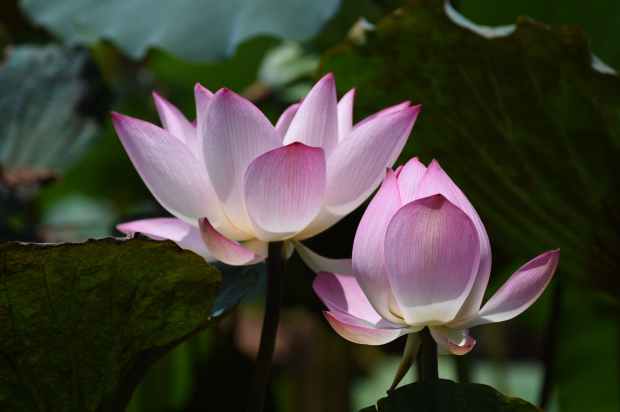
“The flower that blooms in adversity is the most rare and beautiful of all.”
The Emperor of China, Mulan, 1998
Alongside Pocahontas, Mulan is my favourite Disney princess. Mulan honoured us with her debut on June 29, 1998. She is intelligent, unconventional, loyal, selfless, brave, and modest. These traits make Mulan an aspiring role model, and I love her character for this reason. Mulan is of Chinese descent, and like Jasmine and Pocahontas, Mulan provides us with a window into another culture in a place and time in history when all women were regarded as inferior to men.
Like the other Renaissance princesses, Mulan does not fit into her society. She is not graceful, demure, or quiet, all the qualities of a good wife; Mulan is a clumsy, bold, and outspoken 16-year-old. Mulan is a contradiction because she doesn’t care what others think of her, and at the same time, she embraces the tradition of bringing honour to her family by making a good match in marriage. This idea is reinforced by the film’s opening musical number, “Honour to Us All.” We see her being prepared to meet the village matchmaker and pleading to her ancestors to help her not make a fool of herself and uproot her family tree.
Just as the women who came before her do, Mulan shares her thoughts through song, but not lyrics of true love or of a connection to nature. She laments, “When will my reflection show who I am inside,” after a disastrous meeting with the village matchmaker who declares she may look like a bride, but will never bring her family honour. Mulan is the first princess to sing about self-love and wanting to be accepted for who she is on the inside. The ballad “Reflection” demonstrates Mulan’s self-awareness of her inner strength.
The Little Mermaid and Pocahontas addressed prejudice and racism. Mulan took this even further by becoming the first film to tackle gender inequality and sexism head-on. This was a very bold move, and the songs “I’ll Make a Man Out of You” and “A Girl Worth Fighting For” help tell the story of Mulan and her struggles during her army training when surrounded by men who are exceedingly close-minded in their views of women. Rather than marrying for companionship, her fellow soldiers want their future wives to be perfect and stay in the stereotypical/societal roles for the fairer sex.
However, Disney broke the traditional gender norms of past films when they gave Mulan the status of a warrior. Mulan decides her fate as the protector of her family at the foot of the Great Stone Dragon, guardian of the Fa family, after witnessing an exchange between her parents on the eve of her father leaving to join the army. Mushu, Mulan’s sidekick, cannot awaken the Great Stone Dragon because its spirit has already gone with Mulan. Just as Cinderella had her Fairy Godmother, Mulan has the spirit of the Great Stone Dragon and her ancestors to guide and protect her. Mulan sees her true reflection as a warrior in the blade of her father’s sword when she uses it to cut her hair before going to war in his place.
Mulan is similar to Ariel and Pocahontas because she risks her life to save others. In addition to taking her father’s place, fully aware of the death penalty if she is discovered, Mulan also saves her entire regiment by causing an avalanche to wipe out the enormous Hun army with a single cannon. Her secret comes to light after she is slashed by the sword of Shan-Yu, making her the first princess to be injured on screen. She accepts her fate and bows her head in preparation for the sword of Shang, who breaks tradition and the law by letting her live. “A life for a life. My debt is repaid.”
Intelligence is Mulan’s greatest weapon, and she not only wins the respect and trust of Shang and her comrades but saves them and all of China. Mulan asserts herself as a fighter on and off the battlefield and challenges Shang regarding his distrust in her once her true gender is revealed. Mulan has trained and fought the Huns alongside Shang and risked her life to save her father, but continues to battle to break free of the stereotypes and expectations of the female gender imposed on her and all women in China by their male counterparts. She is the first princess to rescue her love interest twice when she forgoes her own safety to help Shang defeat Shan-Yu, even drawing the villain off and fighting him herself. Shan-Yu makes the deadly mistake of underestimating Mulan because she doesn’t have a sword or any other physical weapon. His downfall is failing to realize her greatest weapon is her intelligence.
Mulan is honoured by the Emperor for her bravery, and when she is offered a position on the Emperor’s council, she humbly chooses her family over glory. The Emperor’s words, “The flower that blooms in adversity is the most rare and beautiful of all,” recognize Mulan’s beauty in being different and unconventional. Shang not only respects and trusts Mulan but also admires her intelligence and bravery, prompting him to choose her for his wife. Mulan’s father realizes she has brought honour to her family in a non-traditional and unconventional way when Mulan hands him the Emperor’s gifts of honour: the sword of Shan-Yu and the Emperor’s crest. I believe Fa Zhou felt guilty over the harsh words he spoke to Mulan the night she ran away to join the army in his place. While he still cares about honour and tradition, he is proud of Mulan and grateful his daughter has returned home safe and sound.
Mulan is not of royal birth, nor does she marry into a royal family. She is included in the Disney princess line-up because of her selfless acts of bravery and heroism. Both Pocahontas and Mulan have shown you don’t have to marry a prince or wear a tiara to take the title of “princess,” but can be recognized as royalty for brave and noble actions.
Ming-Na Wen, the voice of Mulan in the 1998 cartoon, describes the legacy her character gave the princesses that came after the second wave of Disney royalty, “Now when you see the Disney princesses, they’re all very independent, and they don’t need someone to save them — that’s the legacy of Mulan.” A beautiful legacy for the Disney princesses and a great lesson to be taught: girls and women can be feminine and beautiful but also respected for being strong, autonomous and intelligent at the same time. Tiana of The Princess and the Frog is a prime example of this.
I loved the movie of Mulan when I was younger, and I love it still as an adult. While I was writing this review, I realized just how alike Mulan and I are. Like her, I never fit in when I was a kid or a teenager; I always tried to be like everyone else but also just wanted to be myself. It’s taken a long time, but I’m finally becoming who I’m meant to be, just as Mulan found her true self when she left to join the army.
I’ve always connected with the song “Reflection,” because it’s a song about wanting to be seen for the person you are on the inside while also struggling to break free of societal and familial expectations. It’s a song about people looking at you and thinking they know who you truly are, but they don’t. People will always see what they want to see, regardless of you showing your true self, but that’s their opinion. Always be the person you want to be and were born to be; don’t settle for being the person someone else wants you to be.
“Why must we all conceal, what we think, how we feel? Must there be a secret me I’m forced to hide? I won’t pretend that I’m someone else for all time, when will my reflection show who I am inside?”
Reflection – Pop Version, Christina Aguilera, Mulan, 1998 and 2020.

