Written By: Lauren Long
Published: August 8, 2021
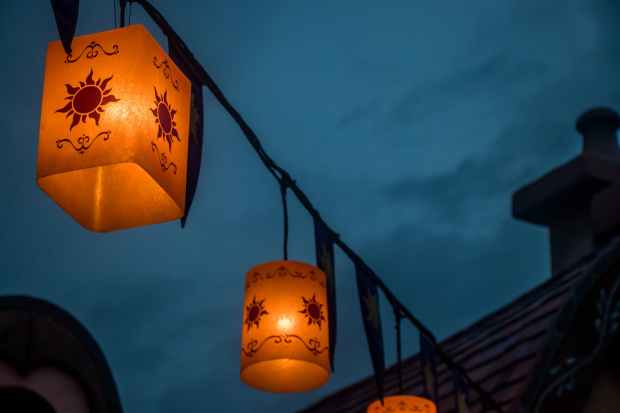
“Venture outside your comfort zone. The rewards are worth it.”
Rapunzel, Tangled, 2010
The theme of being true to yourself has appeared in every Disney princess film, and our next princess is no exception. Princess Rapunzel of Tangled slammed her way onto the screen and into our hearts like a frying pan to the forehead on November 24, 2010. Rapunzel is a kind, compassionate, and intelligent, albeit naive, young woman. This princess was born with magic hair that restores youth, heals others, and glows when she sings, but this comes with a terrible price: she’s kidnapped as a child by Mother Gothel to maintain her youthful appearance. Rapunzel believes Mother Gothel is her real mother and is unaware of her actual heritage.
Rapunzel’s parents, King Frederic and Queen Arianna of Corona, release floating lanterns on her birthday every year in hopes that Rapunzel will see the lanterns and return home. This is a key element to her story because her dream to see the lanterns gives her the push to leave the safety of the tower against Mother Gothel’s wishes. Just as Jasmine has never set foot outside the palace gates, Rapunzel has been confined to the tower for seventeen years.
Despite this, Rapunzel is a Renaissance woman: she is self-educated, she sings, paints, plays guitar, reads, bakes, cooks, dances ballet and charts the stars. We learn all of this with the film’s opening musical sequence, “When Will My Life Begin?” This song represents Rapunzel’s isolation and her desire to escape the tower and her humdrum and repetitive routine. Rapunzel is also resourceful, knocking out Flynn Rider with a frying pan and using her seventy feet (seventy feet!) of hair as a weapon to defend Flynn. She also uses her hair to save herself and Flynn from drowning in a blocked-in cavern.
After being locked in a tower for seventeen years and seeing the world for the first time when she’s almost eighteen, Rapunzel is a little fearful because her captor has instilled the cruelty of the outside world in her. However, her curiosity and eagerness to learn about the world and meet new people outweigh her fear, and she befriends all of the thugs at the local pub, The Fuzzy Duckling. She’s also very inclusive and free-spirited and can look past their rough exteriors and inspire them to find their humanity and pursue their dreams with the upbeat and lively song “I’ve Got a Dream.” When she hears the music in the kingdom, she dances like no one is watching and pulls the villagers into a circle to join in her spontaneous, joyful dancing. Rapunzel blossoms and grows as a person after she leaves home, just like Mulan.
The film’s love theme, “I See the Light,” is a beautiful piece of music, and it’s the anthem of the movie. The song is a symbol of Rapunzel’s self-discovery in feeling she is where she is meant to be at the very moment she and Flynn recognize they love each other. When she returns to the tower, she realizes she is the lost princess as she identifies the sunbeams on her walls, in her paintings, and on her dress are also on the royal flags in the kingdom. She recalls placing the stolen tiara from Flynn Rider on her head and understands this is the final piece of the puzzle of her true identity: She is the lost princess.
Up until this point, Rapunzel has allowed herself to be put down by and obeys Mother Gothel without hesitation. After discovering the truth about her heritage, she begins to fight back to free herself from her captor. Even when Rapunzel is bound, gagged and defenceless, she still fights and makes the offer to sacrifice her freedom if Mother Gothel will let her save Flynn. This selfless act places Rapunzel on the same level of bravery as Belle, Pocahontas and Mulan. The message of loving someone so much you’re willing to give up your own life or your freedom speaks volumes about the depth of these characters.
Rapunzel finds her happily ever after when Mother Gothel falls to her death. She is reunited with her parents and eventually marries Flynn.
Only a few more princesses to go!

