Written By: Lauren Long
Published: December 9, 2022
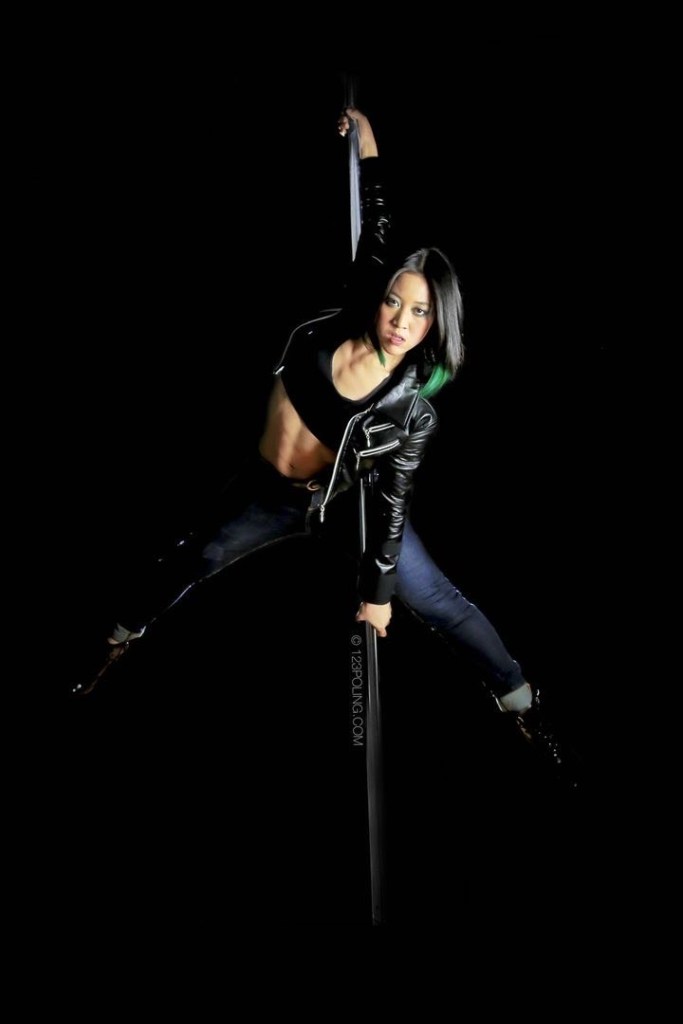
Hello and Welcome! Welcome to the 11th feature of The Empowered Pole Dance Project. As we move toward the end of 2022, I can’t help but reflect on the past months and the project. It’s hard to believe I started writing the stories for this project in May, and now it’s December. It was around September of 2021 that I first had the idea for The Empowered Pole Dance Project, and here I am a year later, writing this story.
Now that that’s out of the way, please allow me to introduce Emily T! Originally from Taiwan, Emily now divides her time between New York and L.A. She has quite an impressive resume; in addition to pole dancing, Emily is a SAG-AFTRA Stuntwoman, flexibility and mobility coach, and an experienced parkour and martial artist! Whew!
I met Emily on Instagram, but I had known who she was for some time before meeting her. During one of my many forays down the pole dancing rabbit hole on YouTube, I stumbled across one of Emily’s videos. In 2016, Emily competed at the Atlantic Pole Championships with a routine inspired by Mulan (more on that later!). During one of our recent conversations, Emily and I bonded over our shared love of Mulan and she told me about her routine and what it meant to her.
On that note, I’m going to turn it over to Emily to tell you about her pole journey.
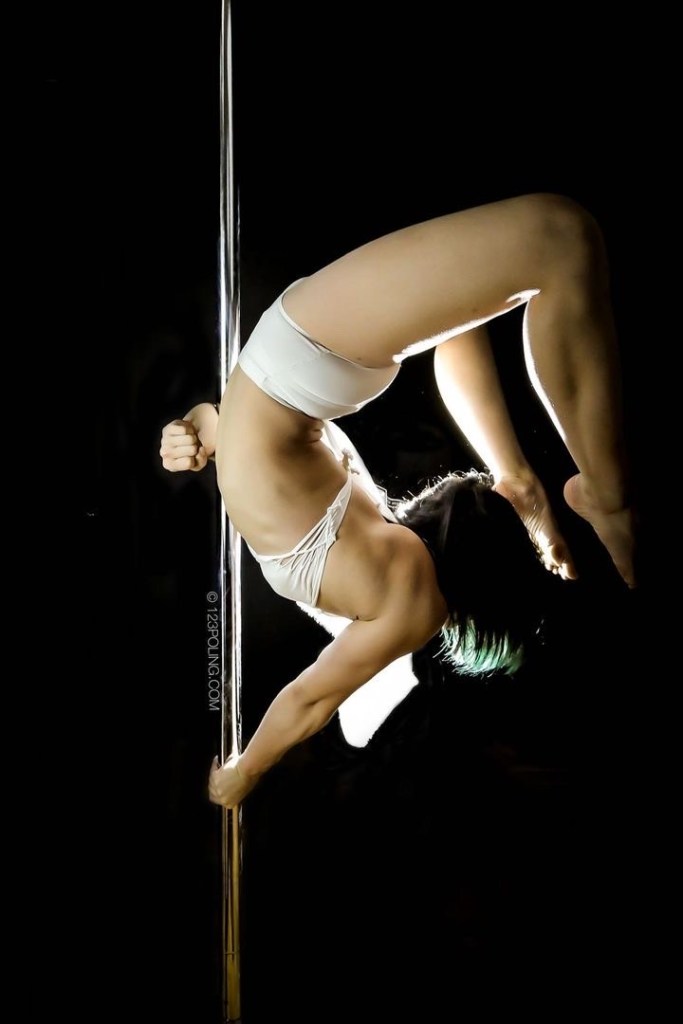
Introduction to the Pole World and The Importance of Raising Awareness
“Pole dancing is a serious sport and art discipline, and the more people who recognize and accept it for what it is, pole dancing and the pole dance community will be less alienated by society.”
“A friend recommended me to a studio after I expressed interest in it,” Emily tells me when I ask her how she was introduced to the pole world before going on to add, “I saw a Jenyne Butterfly video once upon a time and had always wanted to learn it (pole dancing) since.”
I’ve mentioned Jenyne Butterfly before in earlier stories, but for anyone who is just coming to this party or doesn’t know who Jenyne Butterfly is; she is a household name in the pole world. During one of my chats with Emily, I shared with her that the first pole performance that I ever saw on YouTube was one of Jenyne’s performances. “She inspired a generation of pole dancers,” says Emily.
When it comes to raising awareness and educating people about the benefits of pole dancing, Emily believes “it’s a serious sport and art discipline, and it shouldn’t have to always be tied to stripping. The more people who realize what it really is and the benefits it offers, the less likely it will be alienated by society.”
I couldn’t have said it better myself, Emily. With those words, I feel like you summed up the entire pole project and our goal perfectly.
Challenges and My Hoped-for Outcome for This Project
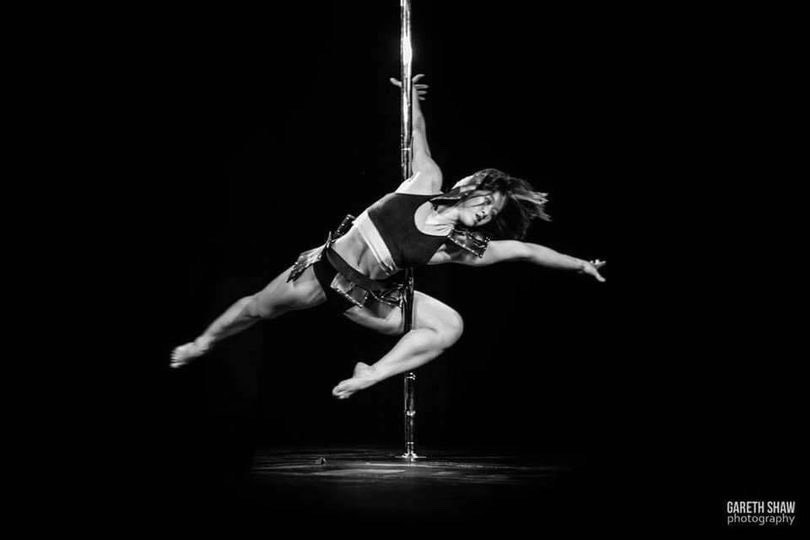
For Emily, the biggest challenge she faced on her pole journey was finding a way to balance her pole training and life. “I really struggled to find the balance between teaching, training, competing, and having fun,” she says. “At one point, I didn’t have a life anymore because I was just trying to compete and make a name for myself, and I was working full-time as an instructor and competitor, but not making enough money, so I was also gigging. The studio I worked for pressured instructors to enter competitions and treated them differently if they didn’t. I was a favourite in the beginning because I came in wanting to compete in the pro division. I entered Pole Sport Org Level 3 and Level 4 (I won in my division) within the same year, and subsequently entered the pro division the following year.”
With pole, it’s so easy to get caught up in the amount of work that goes into training. Add teaching and prepping for competitions, and you quickly find yourself getting burnt out, as Emily did.
In addition to the mental burnout that came with trying to find a balance between the different aspects of her pole life, Emily also struggled physically. “I really struggled with holding my moves long enough and muscle endurance,” she says. “I’m used to power sports and moving fast. I had to slow it down on the pole, otherwise, it would be hard to appreciate each move. Stamina was extremely difficult to build up, I feel like I never really had enough for my competition pieces. Perhaps I rushed to get into levels above my actual experience, and endurance was the number one thing that was noticeable. I just wasn’t strong enough in that way.”
Emily’s experience with the mental challenges of pole plays a role in her hoped-for outcome at the end of this project. “A lot of people asked me why I stopped pursuing it professionally,” she says. “I want people to realize that competition isn’t the only path, neither is teaching and being really good doesn’t mean you have to do either of those things, heck you don’t even have to perform if you don’t want to. Just do it for you, whatever it is you get out of it, that’s what it’s for, nothing more nothing less. There’s no need to force anything you’re not comfortable with unless it empowers you to step out of your comfort zone. I hope people don’t think the pole journey only leads one way. The studio I worked at told me I was too intimidating for their other students and they didn’t want me in their regular classes anymore. The way they saw it, I was an investment to them, allowing me to train at their studio for free as a “competitor” that eventually could represent the studio and hold down their name because they wanted their own celebrity pole dancer without paying them the rate they deserved. They were also pretty possessive, and they didn’t want me to do anything outside of pole dancing, saying they wish I trained more on the pole instead of going to other gyms and doing other things. They would stalk me on social media and advise me not to spend my time at other gyms, and they especially did not want me to teach anywhere else. They made me swear exclusivity to them (everyone that worked there had to do it), and the instructors who did teach elsewhere were fired. The studio once found out that I did a performance at a club and wanted me to get permission from them if I ever did that because they were worried about their “image.” The gig industry is completely separate, I had to stand up against them and tell them to back off because what I do outside of work is none of their business.”
Emily, I am so glad you stood up to them and told them to back off! They were worried about their image because of what you were doing outside of work? I think they should have been worried about their image because of the way they were treating you and their other employees.
Before we move on, I want to talk about how Emily feels she has changed as a person since starting her pole dance journey because it builds on to what she was saying about the physical challenges she faced. “It taught me a lot about performance,” she says before continuing, “I started being more strategic and mindful, how to put out my best performance; it wasn’t always about throwing all my hardest tricks in one routine. It was more about doing the moves I’m 100% confident in even on a bad day. An easy routine done extremely well is better than an extremely difficult piece with a lot of crashes, mistakes, and looking tired. Let your body progress and develop at the pace it’s supposed to and be patient, you can’t rush skill, it takes practice and time to recover and get stronger. Doing extra reps when you’re tired already is not helpful and will just impede progress and increase injuries.”
Dance and Parkour Background and Family and Friends
At the beginning of this article, I mentioned Emily’s impressive resume of being a stuntwoman as well as her profession of being a flexibility and mobility coach and her skills in parkour and martial arts. She was in a movie with Antonio Banderas and did a fight scene with Antonio himself. “I picked up parkour in college so I was familiar with basic gymnastics when I started pole,” says Emily. “Growing up, I was a break-dancer, as well as martial arts and a ton of varsity sports. I was a dance major in college and I did ballet/jazz/modern dance. Pole was basically another “obstacle” to me that I got to create movement on.” Emily’s well-rounded physical background is impressive and inspiring, and her friends and family are among those who are inspired and impressed. When I ask what her family and friends’ initial reactions were, Emily responds “They were actually fine with it. Once my mom confirmed it wasn’t stripping, she was all about it, and once she knew I had to pay to take classes and enter competitions, she knew it wasn’t for the money and felt fine with it. She actually really enjoys watching my videos and brags about it with her friends. My dad was always impressed. He knows me well enough to know why I would be interested in something super artistic and athletic.”
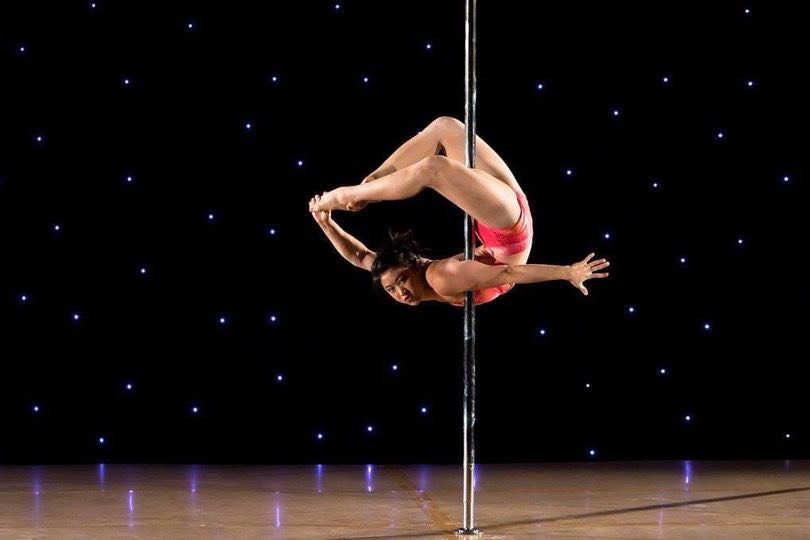
It’s heartening and encouraging to hear that your family is so supportive, Emily. With every story that I do for this project, I’ve heard stories on both ends of the spectrum, and sometimes when I hear a story where family members and friends are not supportive, it’s a little disheartening. Well, okay, not a little, it’s really disheartening.
“My friends all really love pole dancing and think it’s out of this world,” Emily continues. “I do mostly tricks after all, so no one is questioning the nature of it. Some guys can’t help but express that they’re attracted to it, but they won’t forget to mention that they notice the skill and strength it requires, so extra respect is there, but also extra attracted?!”
Being attracted to pole dancing while recognizing and respecting the skill and strength that pole dancing requires? That sounds like my dream guy!
When I ask Emily if she has encouraged her friends and family to come and try out the pole, she responds “Yes, mostly females, they are often shy about it, but most who try it do have a lot of fun. I like showing my male friends how to pole because they are strong and can do a lot right off the bat, and they usually have a lot of fun with it as well.”
Physical Activities and Physical and Mental Health
“Because of the therapy, catharsis and expression that pole gives me, I’ve been able to move through and heal from the trauma caused by breakups.”
Every pole dancer that I’ve interviewed thus far has had their own activities that they supplement their training with. “Parkour and breakdance were both helpful, but I think contortion was the most beneficial,” says Emily when I ask what she cross-trains the pole with. “If I can do it on the ground then I can do it on the pole. It’s a great way to build up to any move, without the fear of falling off the pole or tearing a muscle prematurely.”
Emily, do you have any contortion videos that you can recommend to me? I feel as though contortion would supplement my flexibility training for the pole.
Throughout these past few months, every pole dancer I have interviewed has talked about how pole has helped them become healthier mentally and physically. For the physical side, Emily shares that “pole dancing has caused injuries that have made me re-evaluate how training should be managed; something that feels this good can also be bad for you if you’re overdoing it. I’ve always been fit and did a lot, so I think that pole dance didn’t contribute too much in addition to my fitness.”
Yes, pole dancing can cause injuries, especially if you’re overtraining and are performing movements and tricks repetitively. I’ve pulled and strained muscles to the point where I need to take time off from training or do gentle exercises like yoga or other activities where I’m not putting pressure on the affected area.
On the mental health side of Emily’s pole journey, she says, for her, “pole dancing has been therapeutic, cathartic, and expressionistic,” and credits the sport with helping her heal from trauma. “It’s a great way to channel failures, sadness, and breakups. I’ve turned the emotions that come with breakups into pole pieces before, it’s a way to heal. It makes you feel strong when you’re feeling weak.”
I love that. Emily, I love that you’ve found something that offers you the cathartic and therapeutic release you need for your emotions. A creative outlet is a wonderful thing, whether it be writing, music, or dance, and if you think about it, the three of those are often combined. You take the emotions you feel when listening to a piece of music and find deep meaning in the lyrics, and you meld the two together and express those emotions with your body when you dance.
Finally, when I ask if pole dancing has increased her self-esteem, Emily answers “Yes, in a “wow I can’t believe I can do that” kind of way.”
What Pole Has Helped Me Unlock and Reclaim
Pole affects us all in more ways than one, and what can start out as a journey to learn this sport can unveil a deeper journey. What I mean by that is every pole dance session chips away at an invisible wall, and unlocks a door that we didn’t know was there. A door that has concealed a part of ourselves that we didn’t know we had. For Emily, pole dancing has unlocked the realization that “everything I ever did can be done in one discipline all at once. I learned how to really be myself and flow.”
I love that. The learning how to be yourself and learning how to take the flow that you get from pole dancing and recognizing how that spills over into your everyday life. Emily further builds onto this with her chosen word of fluidity. “When I think of the one word I would use to describe pole dancing, the one that comes to mind is fluidity and the emotion attached is calm. I feel like these two things go hand-in-hand like anything goes.” When I ask Emily how has the pole helped her to reclaim lost parts of herself, she built further on her answers of discovering how to be herself and allowing herself to be carried by the fluidity. “Pole gave me a place to be a girl, to be graceful and feminine,” she says. “It’s a nice change from all the male-dominant activities I’m involved in. I dress a little differently now too.”
Perception of the Pole, Thoughts on the Pole Community and Obstacles
When it comes to the question of has the perception of pole dancing changed, the answers have varied. Sometimes yes, sometimes no, and sometimes somewhere in the middle. When I ask Emily for her opinion on this, she replies “It’s gotten better over the years, and I make sure I make it known when I talk about it. I’m always advocating for pole dancing, and it’s gotten to the point where someone at the very least already knows someone who’s doing it, so the exposure has been good!”
I’m the same as you, Emily, I always make sure I talk about pole dancing in a positive way and I make it clear that I’m not ashamed that I do it, despite the efforts of others to stick a label on me and degrade me. For the most part, people’s reactions have shifted from negative to positive when I talk about pole dancing, and I’ve even had a few people say that they have never tried pole dancing but would like to because it looks so amazing.
Emily says “Yes, all the time. It doesn’t mean they’re serious though,” when I ask if she’s had people who say that they want to learn pole dancing after seeing one of her pictures or videos on social media.
She then goes on to express her thoughts about the pole community when I ask her what she loves about it. “I’m not sure, I actually was around a lot of toxicity,” she says. “I made a lot of friends, mostly amongst students that really love it and wanted to learn. But the performing and teaching circuit did not feel that nice to be around and I eventually got out. I did enjoy just training together and really wanting to get certain moves, as well as helping each other figure out how to get it, spotting each other, cheering each other on, and watching our pain. A lot of this happens during open pole sessions, which is the only thing I’ve been doing. When I worked at the studio, I would work birthday parties sometimes but I hadn’t taught a class before until they threw me into it, due to their lack of a sub system. Because of this, I was quickly burnt out, and even if I was sick, severely injured, or simply wanted time off, the studio was expecting me to find “coverage” that didn’t exist. Besides me, there was only one other instructor and she had most of the same hours. The studio never really allowed me to call out because students were expecting me to be there and it was bad for business, but from a financial standpoint, I couldn’t afford to call out either.”
Emily, I’m so sorry you had a bad experience but I’m glad you had the opportunity to make friends and enjoyed training with other dancers. Sometimes the bright spots in experiences lessen the less-than-desirable parts of the experience.
A bad experience can really have an impact on your enjoyment of something, and that’s true for pole dancers too. I’ve talked before about the stigma and the other obstacles that pole dancers face, and when I asked Emily what she thought the biggest obstacle was, she responded “Injuries are definitely an obstacle for pole dancers, as well as making money for those that are pursuing it professionally. On average, I only made $300-400 a week and I would work 10-12 hour shifts back-to-back four days a week, and afterwards, I would gig at night to make enough money. My youth was taken for granted and the studio expected me to use my days off to train for competitions. If I ever decided I needed a rest day, they would call me and harass me about why I don’t need rest, winners don’t rest, I’m good enough and I just have to believe, and that rest is going to make me weak.” Okay, first of all, the more I hear about the way the studio mistreated you, Emily, the more I wonder how they didn’t get nailed with a lawsuit for not taking their employees’ mental and physical well-being into consideration.
Emily then goes on to say that it wasn’t until she sustained too many injuries (that still bother her to this day) that “I realized I only have one body and I did not want to throw it all away for whatever it is I thought I was fighting for, that they claimed I needed to fight for because I’m on their “team.” In the last competition I did, I felt I put out my best work already, even with multiple injuries that I had to work around (torn hamstring, a torn right wrist, elbow tendinitis, and hip dislocation), I used elbow grip, swapped out power moves like fonji, and only did splits on one side.” Oh my gosh! That is all I have to say. Injuries are definitely something to be aware of in pole dancing, I’ve experienced more injuries during my time as a pole dancer than I did in any of the activities I took part in when I was a kid and a teenager, and injuries can be caused by lack of rest days.
“After my performance, everyone, including my boss, came up to me and said they really believe I’ll take the podium,” Emily tells me. “The results came out, I think I placed 5th, and the other instructor who was also injured and crippled due to an ankle injury came in second place. I was berated for the rest of the evening, publicly in front of all my students and judges and whoever was around, saying I never listen to the studio and I don’t train enough, and that even the other girl who was injured was able to place, so there is no excuse why I couldn’t have also placed.” Of everything I’ve written so far, this makes me the sickest. It makes me sick to hear how you were treated Emily, but to be publicly harangued is just despicable.
The maltreatment that Emily faced and the lack of concern for her wellbeing were simmering in a powder keg, and the public criticism she received at the competition was the match that lit the keg. “I looked to my students and told them “I’m sorry, I think I have to quit.”” Emily says. “They were all super supportive of my decisions, and after I left, they still came to take classes with me up until the point I stopped teaching completely.” If I’d witnessed what your students did, Emily, I would have too. Disrespect and abuse like that should not be tolerated or even permitted.
For anyone interested in trying pole but are hesitant to because of the stigma, this is Emily’s advice: “Do it in private, once your friends and family warm up to the idea, they’ll let it go. Also, show them videos of pro-level dancers and give them exposure to it so they understand what it can be and not just what they think it is.” At some point, you have to let go of others’ expectations and opinions and just do you. Your life is yours to live, and it’s up to you to decide how you want to live it.
What Pole Can Bring to People’s Lives, How It’s Empowered Me and Who Inspires Me
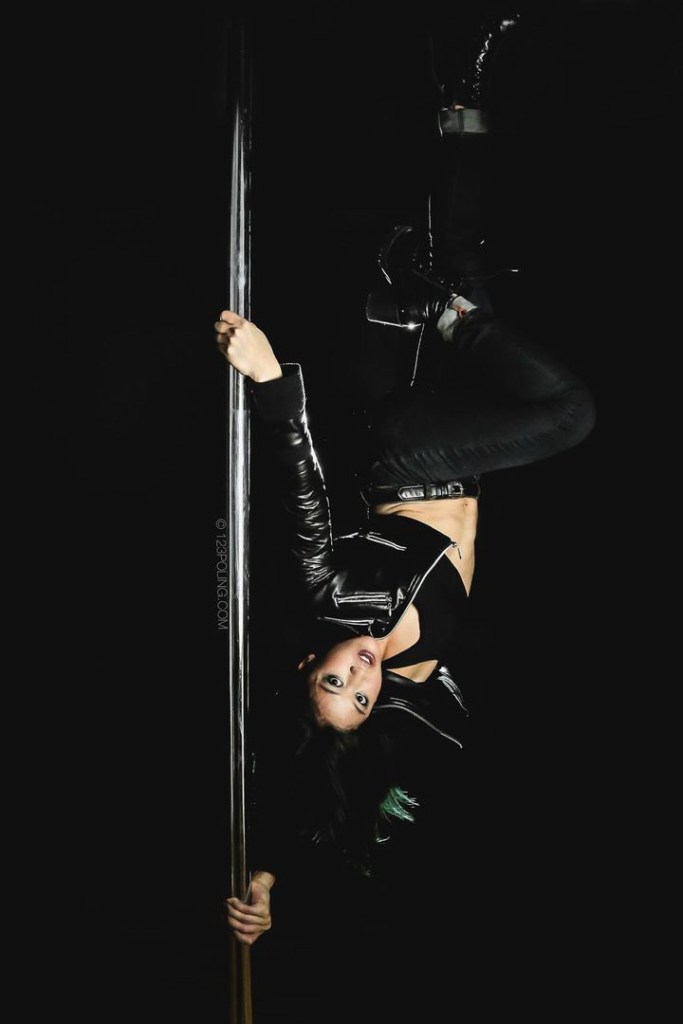
“If you’re going to do something you love, do it for yourself. When you start doing it for someone else, that’s when it stops being something you love.”
Pole dance means different things to different people, but it has the power to bring so much more to our lives than what we expect when we first begin. Emily believes that pole dance can bring this to people’s lives: “A combination of dance and sport, so whatever those two things do for us, it’s basically both at the same time, two birds in one stone. It’s a fun way to work out, party, vibe, hang, get strong, learn how to perform, whatever you want to call it.” Emily, I fully agree with that. I’ve come to enjoy working out more since I started pole dancing, and I feel like I’ve gained the confidence to perform one day too. It’s been very empowering in that way.
For Emily, pole dancing has empowered her in more ways than one and came into her life at the right time. “I got into pole dancing right around the time I lost a job opportunity,” she tells me. “It sort of made me realize there’s always something bigger out there, and when one door closes another will open. So, I never stress about losing work or opportunities anymore, and if it’s time to move on or let things go, I can embrace it, knowing something better is out there, and I have what it takes to get it.” After Emily quit the studio, she had other opportunities lined up right away. “I made more money in one day for an Adidas commercial than I’d made all year working at the studio,” she says. “It was easy not to look back ever again as I was keeping myself from opportunities that were right in front of me this whole time. Being a starving artist is a choice, if you want to be a wealthy artist, you will strive for more, if you want to be a starving artist, you will settle for having nothing. Especially in this day and age, the internet is a powerful tool that can connect us to so many opportunities, there’s really no excuse to stay poor.”
I love that attitude, Emily, and I’m so happy that pole came into your life when it did. We all have to deal with the aftermath of missed opportunities, whether they are personal or professional, and it’s important to remember that that particular instance just wasn’t meant to be and we’re going to be okay.
At the beginning of Emily’s story, I mentioned Jenyne Butterfly. Emily says that Jenyne is one of her biggest inspirations on the pole. “Jenyne was the first pole performance I ever watched and it’s still good to this day. She was strong AF, skilled, yet expressive. I also love Dimitry Politov. He’s what I wish I can be. He’s innovative and hip-hop oriented.” Dimitry Politov is another name I’m going to have to add to my list of pole dancers to look up, thank you, Emily! During the course of this project, I’ve been making note of all the pole dancers that inspire the women who have shared their stories, I’m always looking for new inspiration and continue to find it.
Emily concludes our interview with the memory of the moment she knew pole dancing was going to be a main part of her life. “I just knew after the first class that I wanted to go all in,” she says before adding, “If not for the unfortunate events of having a big fallout with the studio I was working at, I think I would be doing it a lot more. Right now, I do open pole drop-ins whenever I can, but the time frames and locations are limited and it’s difficult (they usually happen midday). I decided if I want to continue pole, I will no longer do it for anyone except myself. I will play, I will perform, I will teach friends. But as a profession? Forget about it. It’s not possible to make all my passions into professions anyways and it’s highly unnecessary to do that just because “I’m really good at it.” I was sucked into it for a lot of the wrong reasons and I loved it enough to ride it out most of the time, but the long-term outcome made it apparent why it cannot remain a career choice. I was sad I spent all these years to finally realize this at the end. I share this part of my story in hopes that the newcomers to the pole dancing world are able to have more insight than me and help you realize sooner what’s right for you and what’s not. And I hope no one has to go through the same thing as me. My mission was to help people find their love for pole dancing, not kill it. There is a community out there that is clearly toxic, but there are also empowering ones. I am still slowly working my way back and giving people a chance but I am going to take my time now and if it doesn’t happen it’s ok too.”
Before I sign off, just let me say one thing: Emily, I have been where you are. I’ve been taken advantage of and had my trust broken so badly that the idea of giving people a chance terrifies me that I physically have to fight myself not to throw the walls up around my heart. Take your time, let your heart guide you and trust your instincts, those last two are more connected than we might think.
Thank you for your bravery in sharing your story because I’m sure it wasn’t easy to bring up those memories, and thank you for being a part of the project. With every voice and every person that tells their story, we are breaking down the stigma around pole dancing.
As always, dear readers, thank you for reading!
Until next time, xoxoxo
As always, the photos and written content in this article are used with consent, with every post being approved by the participants before publishing.
If you would like to be a part of the Empowered Pole Dance Project and share your pole journey, I would love to hear from you!
To get in touch:
Send me a message on Instagram: @laurla731
Empowered Prose Email: lauren@empoweredprose.ca

