Written By: Lauren Long
Date Published: March 22, 2023
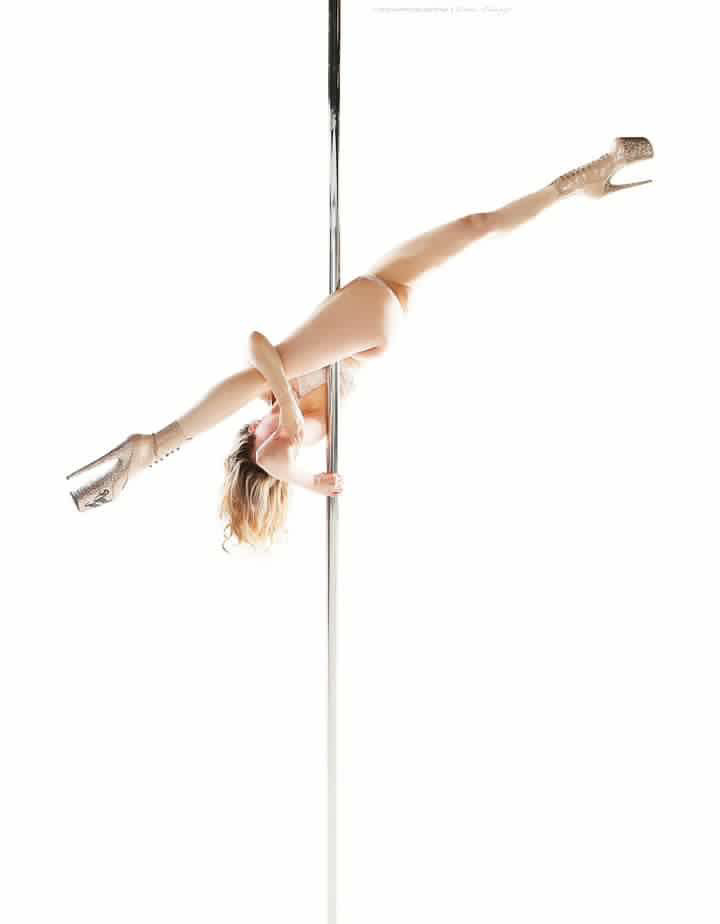
“Find what you love and let it kill you.”
Charles Bukowski
Eight simple words, but these words have power and ring true for Phoenix. Phoenix J is the 15th pole dancer to have her story featured in the Empowered Pole Dance Project, not only to share how pole dancing has changed her life but also to advocate and support strippers and those in the sex work industry. With that being said, let’s turn it over to Phoenix!
How Finding Pole Helped Me Find Home Again
“I remember the first time I heard about it was through a good friend of mine who had gone to a studio for a bachelorette party, and it had never occurred to me that a place like that may exist in my area (Washington, D.C.),” Phoenix tells me when I ask her how she became aware of the pole world.
“I immediately Googled it and I found a nearby studio. I had just graduated with my first bachelor’s degree and wouldn’t begin nursing school for another six months, so I was in desperate need of a hobby as I was so used to juggling full-time work, school, and my daughter. I signed up for a Cardio Twerk & Pole class and was so nervous my whole way there. I had been a competitive dancer in my teen years, and I even did some film work and performances as a young adult, but I hadn’t taken a dance class in years. Less than halfway through the class though, I immediately felt as though I was home. My OG pole mom taught that class, and she was the one who truly got me hooked.” How amazing, Phoenix, that your first pole dancing class was the class where you fell in love with pole dancing and found a home in the dance studio.
How The Challenges I’ve Faced Have Influenced My Desire to Raise Awareness About the Benefits of Pole
“I’d like for people to see pole dancers as athletes and artists, as well as be taken seriously and have pole dance be given the respect it deserves.”
Every dancer, myself included, has faced challenges along their pole journey. We struggle with mental challenges, physical, and societal. “When I first started, I think the biggest challenge for me was defining where I fit in in the pole world as an artist because there are so many different facets to it,” Phoenix says.
“Less than a year into my pole journey, I started working as a stripper, and honestly, the sex work industry drastically changed my view of pole. When we all start pole, we generally follow the same course: intro class, beginner spins, heels, climbing, inverting and then we reach a crossroads where we begin to learn whether we prefer tricks or dancing or a mixture of the two. I came from a competition studio, so I felt a lot of pressure to learn the dynamic tricks and cartwheels and bendy shapes, but after a wrist injury and starting a new job, my progress began to plateau.
Stripping also significantly contributed to who I became as a dancer and an artist. The club was where I learned that my movement had value whether I did tricks, splits or stayed on the floor for my whole set. This was such a strange concept to me as previously I had been programmed to think that tricks trumped dance. Learning to embrace my body’s own limitations and love my dance and art exactly as it was, especially translating this into my competition pieces, has been an ongoing process, particularly since many pole competitions do continue to value tricks over artistry.” Learning that your movement, in any form, has value is such an important lesson to learn, and I’m so glad that you discovered that Phoenix. I’m glad that the club gave you that insight.
“For the societal part of things, the biggest challenge I’ve faced here is the fatigue that comes with constantly advocating for rights and respect for strippers/sex workers, and honestly, a lot of that comes from pole dancers themselves (non-strippers). A lot of people think there’s a difference between stripping and “pole fitness” and while there are different styles of pole dancing, it all originates from the same place. It’s difficult to convince people that “stripper style” is a legitimate style that can only be taught by experienced strippers,” says Phoenix. She then builds this further with her beliefs on the importance of raising awareness and education about the benefits of pole dancing.
“I always encouraged my friends to try pole because of the significant impact it’s had on my life, but I’ve really seen these transformations happen in real-time through teaching my students,” she says. “Though I don’t tend to subscribe to the narrative that “broken” women benefit from pole dancing (e.g., survivors of sexual assault, abuse, etc.), I do believe pole intrinsically is beneficial because of the way that society attempts to stifle and censor sexuality, particularly women’s sexuality. We are taught that our bodies are to be hidden and covered lest they become a “stumbling block” to men, which perpetuates rape culture. Strippers have always flown below the radar. We are creatures of the dark and the night, and yet we brazenly highlight and harness our sexual energy in a world that tells us we can’t.
I built my Exotica curriculum based solely on sharing this knowledge I gained from my years stripping to pass along to my students, and it truly has been life-changing for so many of them. I do understand not everyone enters a pole class wanting to dive into their sexuality, and that’s ok, but even if they don’t ever want to wear heels and dress sexy because of pole’s roots in stripping, many of these same themes still translate into other parts of pole: empowerment, strength, and challenging societal norms. As for the outcome I’m hoping to see by sharing my story with this project, I’d like people to stop viewing pole (and strippers/sex workers) as “dirty” or “classless” and instead see us as athletes and artists and have what we do be taken seriously and given the respect it deserves. I feel as though the perception of pole dancing is becoming more mainstream, but in a lot of ways I feel like this caused more harm than good. Celebrities get praised for emulating strippers in movies and on TV shows while real-life sex workers continue to be stigmatized and banned.”
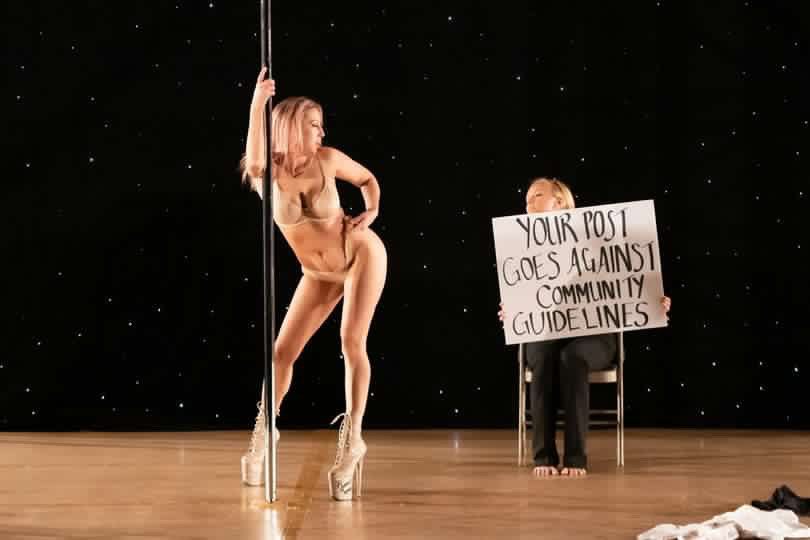
YES!!! YES, YES, YES, YES! Phoenix, I agree with everything you said, and I am so glad you didn’t hold back in saying what you thought.
Self-Esteem and Rediscovering My Purpose with the Pole
“Very much so,” is Phoenix’s answer when I ask if the pole has increased her self-esteem. “Though I’m sure my friends and coworkers would tell you I had plenty of confidence before pole, I internalized a lot of insecurities and cared way too much about what other people thought. Though to an extent those issues never completely go away, pole has given me an outlet through which to channel so many of my anxieties. Plus, there’s something extremely empowering about being able to hang upside down by your knee,” she laughs. She then adds her two cents on how she has changed as a person since beginning her pole dance journey.
“I’ve changed tremendously as a person because I’ve grown more into who I’m supposed to be, pole has helped me discover my purpose while helping me unlock and reclaim the parts of myself that I thought were lost. In many ways, I feel as though pole dancing has helped me become the artist I always wanted to be but gave up on years ago. Pole opens the door for people regardless of age, race, gender, orientation, etc. That’s what it unlocked for me. I always dreamed of dancing and performing regularly, but there are limited options for adult dancers in the way of classes and even fewer opportunities for performing. I also stopped dancing for a few years because I kept getting injured. Though I still have injuries with pole, I feel as though I’ve built up so much muscle and better body awareness that I’m better able to move around my injuries as well as prevent future injuries.”
That just warmed my heart!! Phoenix, I’m so glad that through pole, you rediscovered your purpose and became the dancer and performer you always wanted to be. I would love to take a class with you one day! Like you, I used to care about what others thought and the pole has become an emotional and creative outlet.
Dance Background and Family and Friends
While a background in gymnastics and dance isn’t a requirement for pole dancing, it helps! “I grew up dancing for fun, but I didn’t start taking classes until I was old enough to pay for them myself when I was 14. I took classes and competed until I was 18, and then I pursued professional work as a young adult. My parents were never supportive of me pursuing music and dance as a career, but they didn’t mind it as a hobby. I did grow up in a very religious and legalistic home though, so certain styles of dance were “off-limits” until I moved out at 18.”
Because of her upbringing, Phoenix kept her pole life quiet for a while. “When I first started pole dancing, I didn’t even tell my parents until I placed second in my first pole competition two months in and even then, I referred to it as just “dance” and downplayed the pole part. Even once I became a little more comfortable talking about it around my family, my parents never really were comfortable with it. Even once I started teaching, my dad would just ask how my “classes” were going, but I don’t mind. Their generation is just different. As far as encouraging my family and friends to come and try out the pole goes, I’ve often encouraged my friends to try the pole and many have and have had life-changing experiences. I haven’t encouraged my family (beyond my younger sister) because I like to keep that part of my life separate,” she says.
Phoenix then tells me that she has people say that they want to learn what she’s doing all the time after seeing a picture or video of her training on the pole, and then continues with how pole dancing has helped her mental and physical health improve.
How Pole Changed My Mental and Physical Health
For Phoenix, pole dancing changed her mental and physical health in ways that she never imagined, and she begins this part of her story by telling me about how it impacted her physical health. “I’ve been a dancer for most of my life and entered pole with a reasonable amount of flexibility, but I was constantly injured and suffered from awful back spasms that actually took me away from dance for a few years. I was always told to build up my core muscles to better support my back and hips, but I never found an activity that really produced any true results until pole. Since starting pole I’ve significantly improved my stamina, strength and pliability, and I can’t remember the last time I had a back spasm. When it comes to supplementing my pole training, I like trying lots of different things. I started silks at the same time I started pole, and I found silks to be great cross-training for pole. I also learned the Lyra and sling from my time in the club and continue to use those to this day. I started working with a yoga bench and found that helps a lot with handstand practice. Additionally, I go to the gym when I can and stay consistent with flexibility training at home,” she says.
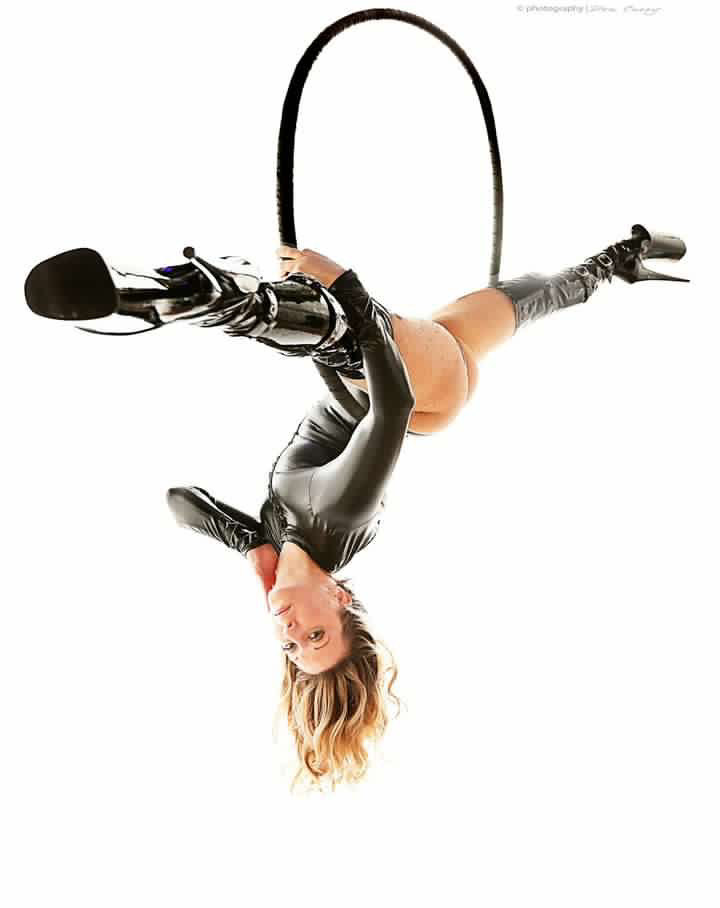
I totally hear what you’re saying Phoenix, before I started pole dancing, my core was very weak and as a result, I had a lot of back pain. I also have scoliosis, but ever since I started pole dancing my spine has straightened and my back doesn’t hurt anymore because I’ve built up core strength and muscles. I’m 31 years old and I still can’t believe it when I see how my back muscles are continuing to get stronger and show more definition.
Phoenix then continues her story with a terrifying event that has a happy ending. “I suffered a massive infection when I had my daughter 14 years ago and I ended up on and off dialysis for a year and in heart failure with a cardiomyopathy, facing a kidney transplant,” she says. “I made a spontaneous, miraculous recovery just before I was officially placed on the transplant list, but I was still so weak I could barely walk most days. It took years before I even attempted to start dancing again, and even then, I kept getting injured. I never dreamed I’d have the abilities I do now. Through consistent training, better body awareness and healthier eating habits, pole has provided me opportunities to achieve a level of recovery I’d never imagined.”
Oh, my goodness, Phoenix. I got the shivers when I read that for the first time, and I got goosebumps typing it. I’m deeply humbled that you shared that part of yourself and your story with me because I’m sure it wasn’t easy to talk about it. Sadly, I lost my belief in miracles some years ago, but hearing yours makes me rethink that maybe miracles are real.
Phoenix also credits pole dancing with positively impacting her mental health. “I live with PTSD and suffered flashbacks, anxiety and fogs that greatly affected my ability to function for years,” she says. “Though pole didn’t take the place of therapy, it provided me an outlet through which to channel my anxious energy and a community that was extremely understanding and supportive of my “bad days”. It also helped me to tap into my sexual energy and explore and express that in a safe, nurturing environment. I’ve also lived with an eating disorder for almost 25 years; when I took my first pole class, I only weighed 112 lbs. Pole has encouraged healthier eating habits because the workload demands it. Being surrounded by other athletes who modelled healthier lifestyles and relationships with food also influenced me in such a positive way.”
Pole has done the same thing for me, Phoenix. And when I say it’s done the same thing, I mean that pole dancing has changed my relationship with my body and with food.
When I ask Phoenix if she feels as though pole dancing has helped her acknowledge and heal from trauma, she responds “I tread carefully when discussing this because I know there’s been confusion in the community over people referring to pole as “therapy,” and while I do agree pole is therapeutic, it can never take the place of actual therapy with a trained and licensed practitioner. One thing I am personally exploring is obtaining training and licensing as a trauma-informed dance therapist as I would like to merge that training with pole someday because I do feel that pole does provide a good environment for that type of therapy.”
You make a very good point, Phoenix, when you say that pole is cathartic, but it can’t take the place of sitting down and talking to a therapist. I have found, through merging my love for pole dancing and writing, that I get more out of my counselling sessions because I’m not going around in circles and getting hung up on the same things over and over again.
The Pole Community and What Pole Can Bring You
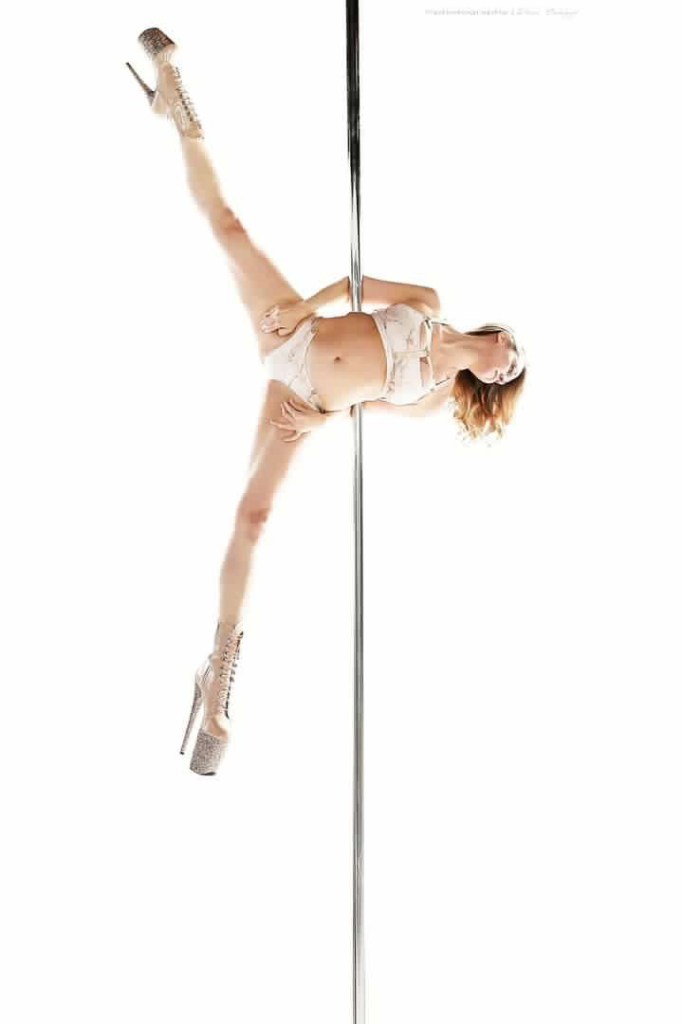
“The pole has the power to transform you. As you dance, you take the steps towards becoming your authentic self, the person you truly are.”
“When it comes to the pole community, what I love most is the instant camaraderie you’ll find almost everywhere,” says Phoenix. “I work as a nurse, and I’ve always heard how nurses have a special bond, and while yes, this is true, they’ve got nothing on the pole community. What is unique about the pole community is how people automatically love and accept you as you are without even knowing all the details whereas the rest of the world is often the opposite.”
That is very true! I’ve never experienced a stronger feeling of belonging and acceptance anywhere else than I have with the pole community, and with the community that I’ve built for myself with this project. It’s a safe space and an escape from the judgment of others.
Phoenix then builds on what she loves about the pole community with what she feels pole dancing can bring to people’s lives. “Though everyone has different experiences, the commonality I’ve seen across the board in my own life and in my students’ is community and confidence, and I think these two are connected. So often in life, especially with the constant blaring of social media and pressures to look and act a certain way, we tend to be extremely self-critical, and we isolate ourselves to control others’ perceptions of us, only showing the parts that “look best.”
However, having a supportive community can do wonders for our self-esteem and confidence and help us to embrace our entire selves. I think the vulnerable nature of pole (for example, more exposed skin, sensual movements, roots in sex work, etc.) forces us to really dive more into our own feelings and thoughts surrounding self-exploration, which I think is largely why pole is such an enlightening, transformative experience for so many. The word that I would use to describe pole dancing is transformation, and I feel most would agree that pole can be very transformative, but not in helping us become someone else but rather grow into more of who we truly are. An associated emotion with this would be contentedness as I feel that going through a transformation into a more genuine version of ourselves brings about such feelings of peace and stillness.”
With every story that I write for the Empowered Pole Dance Project, there is always something that a dancer says that gives me goosebumps and chills throughout their story. Phoenix, your thoughts on how pole dancing can transform you did that. As we’ve seen, pole dancing can transform and improve not only your physical health but your mental health as well, and I think the feelings of peace and stillness you’re talking about are a big part of improved mental health.
Advice to Potential Polers and Subjective Obstacles
When I ask Phoenix if she has any words of wisdom to share for people who are interested in learning how to pole dance but are being held back by the stigma and fear of rejection from family and friends, she says “At the end of the day, you’re an adult, and you have to do what’s best for you. If your friends are truly your friends, they’ll support you or at least try to understand, and if not, you’re not losing anything. It is also important to remember that support can look different for everyone.
Some of my friends’ parents love coming to competitions and cheering them on, but that’s not the case for everyone, and that’s ok. As with my family, I would never invite them to any shows or performances because I know that would make them uncomfortable, and I respect that, but they also don’t talk down about pole or speak negatively about my classes, competitions or community.
In terms of the obstacles that pole dancers face, I think this can be very subjective to each individual dancer as everyone’s journey and personal goals vary so widely. I think a general challenge I see throughout the community is being mindful to be respectful of not only the roots of the pole in sex work/stripping but also not attempting to minimize the expertise of those who practice it. Without going too much into a tangent, there is a danger within the community, due to lack of standardization, where individuals without the proper skillset become instructors. I feel strongly that only strippers should teach stripper style, but also that only those properly trained and certified should teach pole tricks as well. It seems to be a trend within the community for everyone to want to be an instructor, but, just because you can do something well does not mean you will teach it well, and due to the physically demanding nature of what we do, I think it is extremely important that we have properly trained and certified instructors.”
Empowered By Pole and Pole Inspirations
Earlier, Phoenix shared her dream of being a performer and artist, but her parents weren’t supportive of her pursuing a career in the arts. Well, destiny had other plans, because when Phoenix discovered pole dancing, that dream was reawakened and the part of Phoenix who wanted to perform was unlocked. “Becoming a pole dancer has empowered me in other parts of my life because it has given me confidence and security that has carried over into other areas of my life. For me personally, this is because I always saw myself as an artist, but struggled for years to stay active with music and dance due to injuries, work responsibilities, school, and so on. Pole dancing has helped me to find my way back to where I left off many years ago. I think this is because pole has a great way of reminding us that we are never too old for almost anything whereas the contemporary dance and entertainment industries tend to cater to younger demographics.”
I love that! Phoenix I’m so happy you found pole dancing and that it gave back the desire to pursue your dream of being an artist and performer. I have seen your videos on Instagram, and you are amazing, it’s like you were born to do this!
Behind every pole dancer, there are pole dancers who inspire them and they aspire to. “I love dancers like Heather Williams, Medusa Mami and Kushina who have such a slinky yet controlled flow,” says Phoenix when I ask whose work on the pole she is inspired by. “Their movements are so simple and fluid, yet also extremely difficult to emulate. I also love Hali Quinn, who has more of a Hardstyle flow. I love Russian Exotic. Alena Kuzmina is one of my favourite Hardstyle dancers to learn from.”
The Moment I Knew Pole Dance Was in My Life to Stay
“As I was sitting on the studio floor with complete strangers and sharing stories, I knew right away that the bonds and camaraderie I was feeling was something I needed.”
We wrap up our interview with me asking Phoenix to tell me about the moment she knew pole dance was going to be a main part of her life. “It was probably after my second class, honestly,” she says. “I remember it was a Friday night, and class had long since been over but we ran late and were just sort of playing around, sitting on the studio floor, talking and sharing stories with our instructor. That bond and camaraderie amongst literal strangers were so strong and unlike anything I had ever experienced before, and I knew this was something I needed in my life.”
With that, dear readers, the 15th story of The Empowered Pole Dance Project concludes. Thank you, Phoenix, for sharing your journey with us, and thank you to my dear readers for reading.
As always, the photos and written content are used with consent, with each story receiving final approval from the dancers before publishing.
Want to join the Empowered Pole Dance Project? Send me an email at lauren@empoweredprose.ca, I would love to hear from you!
Until next time, xoxoxo

