Written By: Lauren Long
Date Published: April 29, 2023
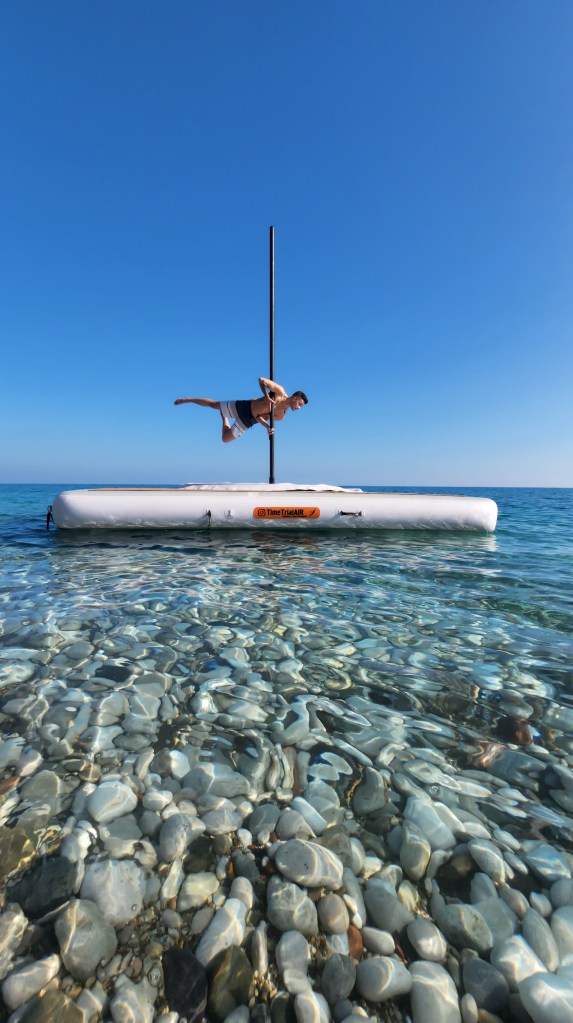
Hello dear readers, and welcome to a new story for the Empowered Pole Dance Project. Please give a warm welcome to Blue B! Originally from New Zealand, Blue now lives in Washington, DC and was inspired to join the pole world after seeing pole content on Instagram. Blue is the 17th dancer to share their story with the pole project, and I couldn’t be more honoured to have them. So, without further do, let’s turn it over to Blue and hear their pole journey.
I Discovered Pole Dancing Right Before Covid-19
“I started seeing pole dance videos on Instagram and I thought it looked so impressive and beautiful,” Blue tells me when I ask them how they were introduced to the pole world. “The dancers had such incredible body control and strength and I really wanted to start learning. But right around the time I discovered pole dancing, the COVID-19 pandemic started and lots of studios were closed. When things started opening up again in 2021, I booked a few lessons at a pole studio that was local to me in DC, and from then on, I’ve never stopped. I’ve been pole dancing for about two years now.”
Instagram is a great place to discover pole content, and like you Blue, I never cease to be inspired by the dancers whose videos I stumble across. I’m so glad you were able to try pole dancing when 2021 came around and we were all able to start doing things again with the rollout of the vaccines.
How Pole Can Help People Reclaim Their Relationships with Their Bodies and Physical Exercise
“Pole dance is one of the alternatives to traditional gym workouts, and I’m really happy to see these different exercise options that are allowing more and more people to realize and reclaim their relationship with physical activities that make them happy.”
After hearing Blue describe their introduction to the pole world, I then ask what their thoughts are on the importance of raising awareness and educating the public about the benefits of pole dancing, to which they give a very interesting and very authentic answer. “My answer to this isn’t necessarily about pole dancing specifically – but I think a lot of people have this association with exercise and fitness as being something miserable, or something that’s a punishment that you force yourself to do because it’s “good for you,” Blue says. “I think a lot of it comes from school, where gym classes weren’t a good time for lots of people, or from toxic diet and weight loss culture.”
Blue, you absolutely nailed that! That answer is bang-on because you’re absolutely right! I did not enjoy gym class when I was in school, in fact, when it comes to which class I hated the most out of the required classes I had to take, that would be it. I also agree that exercise as a “punishment” comes from the poisonous diet and weight loss culture that permeates our society, which in turn ties into the body image shaming part of things.
“I think it’s really important that people can find a way to move their bodies and do “exercise” that’s actually fun and that they enjoy for the sake of enjoyment, not because they feel like they have to,” Blue continues. “Pole and aerial circus are the ways that I’ve found to do that, for other people, it might be dance or rock climbing or yoga or something completely different, but I’m really happy to see a lot of these alternatives to traditional gym workouts become more popular because it shows me that more people are reclaiming their relationship with physical activity in a way that brings them happiness. And don’t get me wrong, the pole can be a really intense workout and it can be painful and challenging (especially at a more intermediate/advanced level), but at its core, it’s about celebrating your body and taking pride and joy in what it can do. And there are so many different styles and techniques that literally anyone can do it, no matter your body shape or size or age or ability.”
What a fantastic response, Blue! Once you find an exercise that’s fun and you enjoy it, and you’re not doing it because you feel like you have to, that’s when your outlook and relationship with exercise changes. Pole dance can be challenging, we’ve heard that from every pole dancer who has done the project thus far, but your physical abilities will change and evolve as you continue to do pole. It can be scary to start, for sure, but once you do you’re amazed at the progressions you’ll see if you stick with it.
Challenges and My Hope for The Outcome of This Project
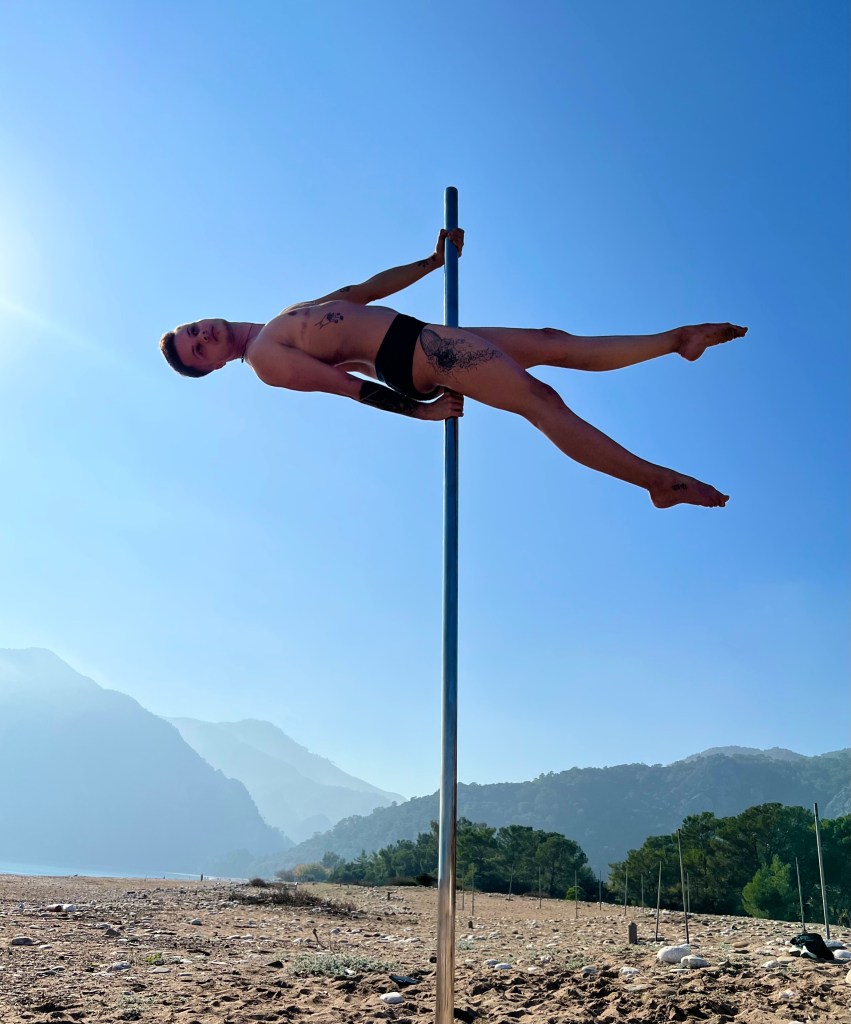
“There are no prerequisites to pole dance, you can start whenever you like. There’s not a rule saying you have to have a background in dance or gymnastics.”
“When I started, physically, pole was definitely a challenge for me because I have no dance or gymnastics background. I had no prior experience whatsoever, and I actually didn’t even do gymnastics in school,” Blue says in response to me asking them about the challenges they’ve faced on their pole journey. “I didn’t have a lot of flexibility when I started (I still don’t have a lot of flexibility compared to many pole dancers!) and while I was pretty fit and regularly exercised already, I didn’t have the sort of fluid movement that dancers have. I didn’t know how to look graceful and I still struggle a lot with keeping in time with pole choreography. I still struggle with flexibility a lot, and I ended up injuring my hip by pushing myself too far trying to do a move I was nowhere flexible enough for (oops) and I had to go to a PT to strengthen it again. The more ‘dance’ elements of the pole were hard for me at first as well. Actually, they are still hard too! I definitely lean more towards tricks and strength-based pole moves because I’m not a great dancer on the floor and I’m still trying to get more mobile and fluid with movements.”
Blue, I am right there with you when it comes to flexibility. I’m more flexible now than I was when I first started my pole journey, but it was something I really had to work at. As for looking graceful, I can relate to that as well because there have been a few times when I’ve fallen over after trying a spin off the pole, and I struggle with keeping in time with pole choreography, particularly if I’ve been away from training for a while.
In addition to physical challenges, Blue has also faced the mental challenge of being frustrated with themselves. “I think mentally, I’m the sort of person who is very hard on myself if I’m not good at something quickly,” they say. “And a lot of stuff in pole takes time and practice and work – you’re not just going to be magically good at it right away. That was hard for me, I tend to want to give up on stuff if I’m not seeing quick progress, but pole has taught me to enjoy the journey, even if it’s slower and more frustrating than I’d like. The mental and physical challenges are what stop a lot of people from trying pole dance, and I say that because I’ve met a lot of people who, when I say I do pole and aerial, tell me that ‘Oh, I’d love to try that but I’d never be able to, I’m not strong enough,’ or ‘I’m not brave enough,’ or ‘I’d look stupid.’ I hope that this project shows the public that there are all sorts of people in pole, from all sorts of backgrounds, and you can start whenever you like – there are no prerequisites. So, what I hope to see from this is more people who want to try pole actually trying it!”
I’ve heard many variations, both firsthand and from the dancers who have participated in this project, of people saying that they’d love to try pole but they all come up with different reasons as to why they can’t. Is trying new things scary? Yes, but living with regrets when you’re not able to do those things anymore weighs heavily on your soul and heart. If we’re brave enough to challenge ourselves by doing the things that scare us, we unlock a world full of possibilities.
Encouraging Family and Friends to Try Pole and Their Support
It doesn’t matter how many stories I’ve done for the Empowered Pole Dance Project; I never know what the response to my question about family and friends’ reaction is going to be. Some people have had a positive response, others have had a negative one. For Blue, the response of their family and friends was the latter. “I’m lucky that I come from a pretty progressive and chill family, so honestly most people were either curious or excited for me,” they say. “My mum especially is super impressed by my pole tricks and likes and comments on nearly every single one of my Instagram posts . . . it’s like those movies scenes where the parent proudly drops the kids off at school, very sweet but a little embarrassing.”
That just put a huge smile on my face! Blue continues, “When I did my first pole competition earlier this year, I sent a video and a picture of the medal I won to my family’s group chat and my grandma sent me back the nicest message about how the routine was wonderful and how pole dancing was an art form! When I was back home in New Zealand recently, I set up a pole in my dad’s garden and was teaching my little sisters (who are 12 and 13) how to do tricks on it. They would make up their own routines and perform them for me, it was so fun and I feel so lucky I got to share that with them.”
What a beautiful thing, Blue, to be able to share that with your sisters and have the experience of watching them have fun on the pole, as well as the freedom that comes with that.
In response to my question about whether or not they have encouraged their loved ones to come and try out the pole, Blue gives me a resounding yes! “I encourage everyone to try pole!” they say before adding “Actually, my mom recently did her very first pole class!” Oh my gosh, Blue, that is amazing!!!! It’s so cool how your mom not only celebrates your success on Instagram but also that she is doing pole for herself. You’ve inspired your sisters and your mom, and I think that’s the most wonderful thing. Keep doing what you’re doing, because you never know who you’re inspiring!
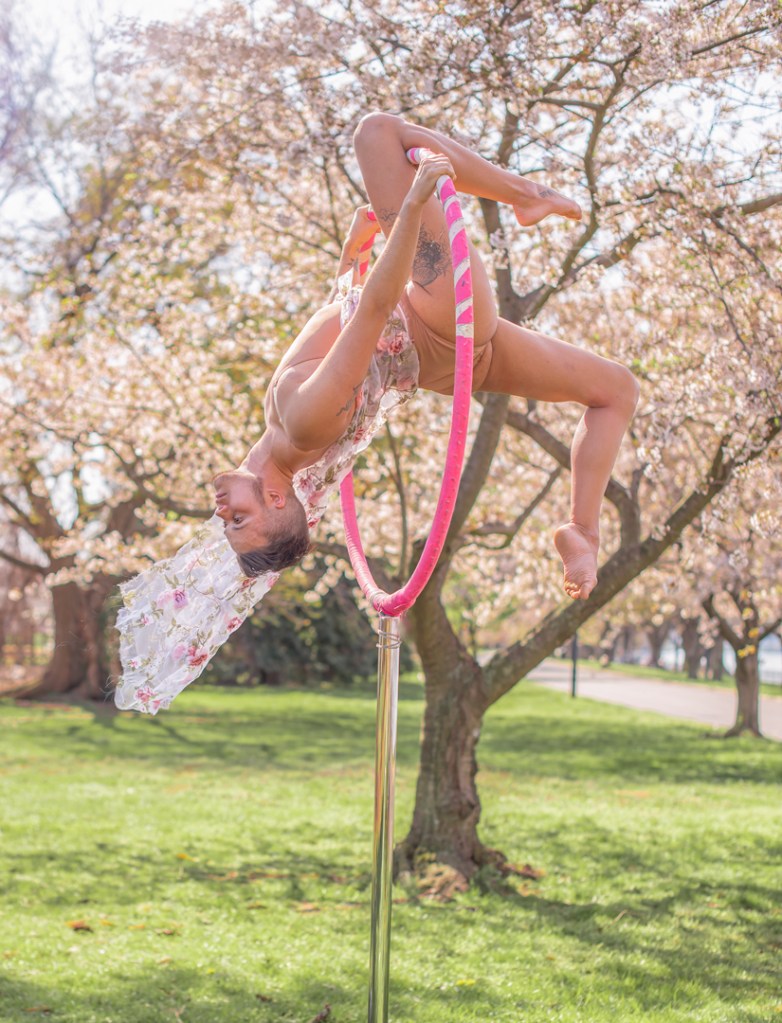
Blue then elaborates further on the people who have been inspired by their videos and photos. “I’ve had tons of people who have said they want to learn what I’m doing after seeing one of my pictures or videos,” they say before adding, “But it’s usually followed up with “but I don’t have the upper body strength” or something like that. Which is all backwards! You shouldn’t wait until you are ‘good enough’ to do something to start it, you should start as a beginner and then you will get better by doing the thing!”
Blue, once again you’ve hit the target! There are so many people out there who think that to be a pole dancer, they need to have extreme upper body strength to begin with, but the truth is you build that strength every time you train. Whether it’s on the pole or with other physical activities that build your strength and endurance, you are getting stronger.
How Pole Has Affected My Mental and Physical Health and What I Cross-train With
“Physically, I’m in the best shape of my life. Pole has made my upper body strength and core strength a lot better, and I’m gradually improving my flexibility as well,” Blue tells me when I ask how pole dancing has changed their physical health. “Pole works a lot of muscles and movements that don’t really get used in everyday life so once you start learning and developing those skills it feels superhuman, the stuff you are able to do.”
You are absolutely right about that, Blue! I had one of my girlfriends over a few weeks ago to try out the pole and she found the movements that I was showing her to be difficult because her body was doing things it wasn’t used to. Your body definitely goes through an adjustment period, but once you come out on the other side of that, there’s no stopping you!
“Yes, I do a fair amount of bodyweight/calisthenics type workouts as conditioning for pole,” Blue replies when I ask them if they use calisthenics as part of their training regimen. “I used to do more gym training with actual weights but I haven’t done that for a while – I should probably start back up again, I just got too busy! I also have started incorporating dedicated mobility training into my training schedule, as well as just doing stretching, because I feel like that’s a weak spot for me and it’s really important to have a good range of motion and control in your joints to progress in pole and avoid getting injured. Mentally, I find doing things that are physically difficult and tire my body out is just really good for my brain. I tend to have a lot of excess energy, or get overstimulated or need to be constantly busy so without hobbies like pole – which is just the right mix of challenging, creative, and rewarding – I go a bit stir crazy.”
Changing as a Person, Reclamation of a Positive Relationship with My Body and Self-Esteem
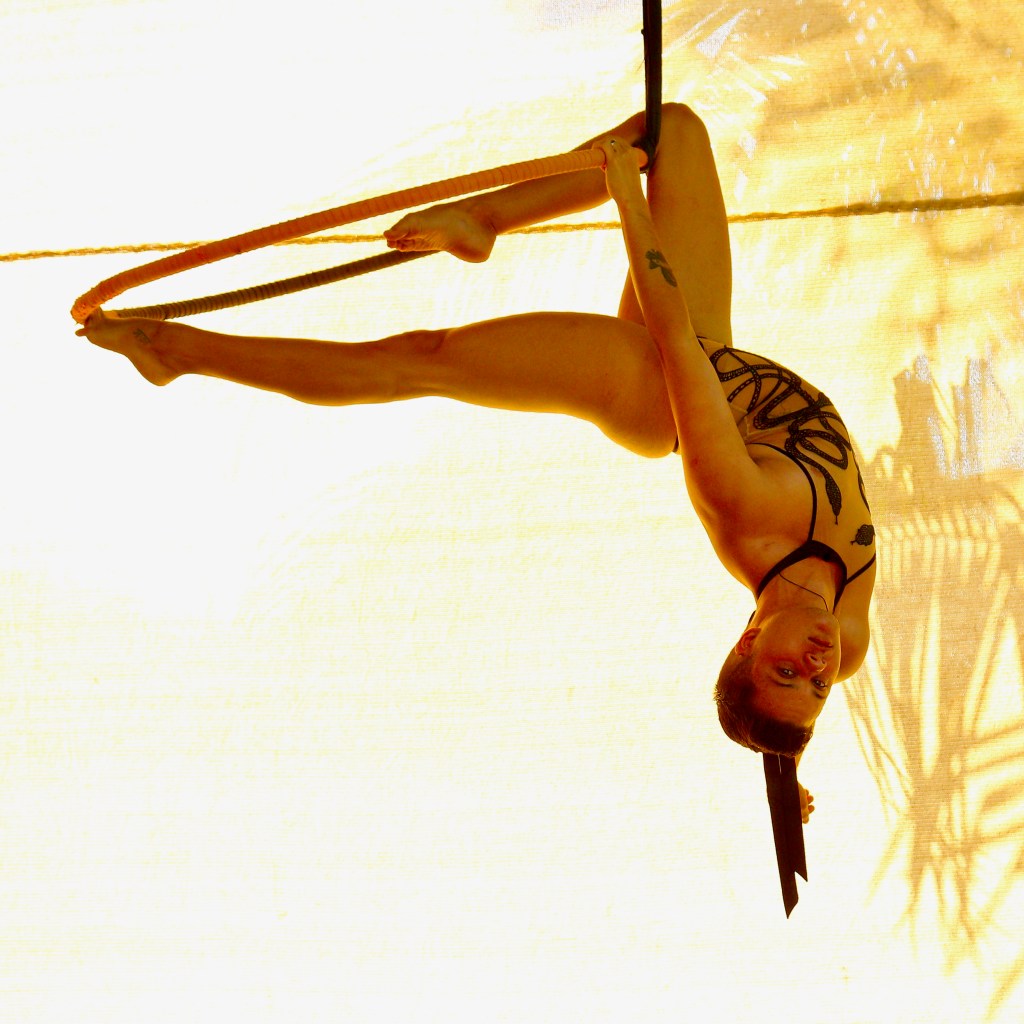
“I definitely think pole has made me more confident, but I also think it made me a bit more relaxed,” Blue says when I ask them how have they changed as a person since starting pole. “It’s impossible to do pole without sometimes failing at new tricks, or getting stuck upside down in a silly pose . . . or trying to do a sexy piece of choreography and looking ridiculous. At first, I would get embarrassed or shy about getting things wrong but after a while, you kind of learn to laugh at yourself and take it less seriously.
It’s made me a lot less self-conscious, and I really do think it helped me reclaim a positive relationship with my own body. I came out as transgender in my late teens, and when I was in my early twenties, I did top surgery (a gender confirmation surgery to remove breasts) and started masculising hormone treatment. It was something that I had been waiting for, for a long time, and it was the first step in me feeling like I had ownership and a real connection to my own body. Before that point, I experienced a lot of physical dysphoria (which is like a feeling that your body is wrong or isn’t your own because it doesn’t reflect the gender you know you are inside). It wouldn’t have really been possible for me to do pole before I transitioned, because I never would have felt comfortable enough in my body to do it.”
Before we go any further, Blue, I just want to say how incredibly humbled I am that you felt comfortable enough to share that with me. It takes a great deal of courage to be vulnerable like that with someone you haven’t even met in person, and I thank you for trusting me like that.
Blue continues “Since starting pole, I’ve felt myself growing into my body, getting stronger and more confident in what I can do and how I present myself. I feel like I’m not only getting stronger but also finally shaping my own body into the person I am supposed to be, Pole is only one part of that, but it has definitely helped, especially when it comes to developing my own creativity and boosting my confidence. I think it would be pretty hard for pole not to increase someone’s self-esteem! Pole is basically a journey of learning how to do impossible things. I’m so proud of the things I’ve achieved in pole in just the couple of years I’ve been doing it. I got on stage! In a competition! And it was terrifying! But I did it! A big part of it is that the pole community, or at least the parts of it I’ve interacted with, is a community of people who cheer you on and pump you up. I’ve been lucky to have really amazing classmates, as well as teachers who know when I need encouragement and when I need to be pushed harder.”
What I Love About the Pole Community
“I think the thing I love most is what a wide range of people there are who are brought together by this one thing! At the pole and aerial studios I have been to, I have met people who were professional ballet dancers and people who have never danced in their life, people who were U.S. Marines or who are Ivy League lawyers, people who are in their sixties and kids as young as 12. . . people from literally every walk of life who all share a love of pole. And everyone is so encouraging and just wants to celebrate each other’s successes. I’ve also found pole (and circus) to be a world that is very welcoming for queer and trans people. I think most people who try pole are willing to step a bit outside of convention, so it tends to be full of open-minded people. It’s like a haven for the weirdos – in the best way! As for what pole can bring to peoples’ lives, I think pole can be a lot of different things for people. It kind of depends on what you put into it and what you want from it. It can be as simple as a fun way to exercise, or it can be a community, or it can be a creative outlet or a way to push yourself out of your comfort zone. Or it can be a bit of all of those things. It’s important to find the things in your life that challenge and inspire you. For me, pole is one of them.
The Perception of Pole and Stigma
“The perception of pole has definitely changed and become a lot more socially acceptable, especially in big cities,” Blue says when I ask them for their opinion about the perception of pole dancing changing for better or for worse. “There’s more perception and awareness now of pole as a ‘sport’ or of ‘pole fitness’ as an option. In general, I think that’s a good thing – it definitely makes pole more accessible to more people. But on the other hand, I think the ‘mainstreaming’ of pole can be a double-edged sword. Something I have noticed is that for some people, to make their pole hobby more socially acceptable, they try to distance themselves from the parts of the pole they don’t want to be associated with – a.k.a. the sexy and stripping parts. They say things like ‘You shouldn’t sexualize pole dance, it’s a sport.’ But those things are a part of the pole too!
Doing pole doesn’t mean you have to dance sexually, or that you have to wear platform heels, and of course, not every pole dancer is a stripper . . . but it’s also important to acknowledge that a lot of the modern art of pole dance comes from “exotic” dance and a lot of the tricks we do were invented by strippers. A lot of it also comes from non-Western origins, like mallakhamb, or Chinese pole, or the Egyptian and Middle Eastern dance techniques that became a part of early American circus shows.
So, I’m glad to see pole dance becoming more widely accepted and seen, but I hope it doesn’t come at the cost of sanitizing pole and removing it from its origins.”
Blue, once again I am blown away by your honesty and authenticity. You’ve made some very valid points throughout your story, and a lot of them were things I wouldn’t have thought of before.
When it comes to stigma and how this plays a role in people hesitating to try pole dance, Blue offers their thoughts on the matter. “I can’t tell anyone how to deal with their family or friends because I can only speak for my own life. But you can’t control other people’s reactions to what you do, so in the end . . . if you want something enough, you shouldn’t let other people stop you. If people react poorly, that’s on them. If no one ever had done anything with a stigma attached to it, we’d be all doing basically nothing all day.”
That’s very true!!
The Biggest Obstacle Pole Dancers Face Is . . .
“I think stigma and judgment can be a big issue, but honestly I think the biggest obstacle for pole dancers (especially at higher levels) that comes from that stigma is that the sports science of pole dance is really under-researched and under-provided for. The few studies that have been done show a really high rate of injury in intermediate to advanced pole dancers who have been performing for several years, but there are very few physios/PTs or even pole dance trainers who fully understand the physical demands of pole dance and how to program pole conditioning and training that prepares people for more advanced tricks in a way that will be sustainable and won’t get them injured.”
Yet another thing I haven’t considered, I see your point, Blue! I have noticed there’s very little literature about pole dancing out there, and hopefully, that will change.
“One thing that made a big difference for me was working with a physical therapist who specializes in circus athletes,” Blue says. “It’s something I really recommend that anyone who pole dances a lot do if they can because a lot of regular PTs don’t really get the sort of movements or positions used in pole dance and will just tell people to stop doing certain things instead of helping them get the strength or mobility required to hold a pose under load.
PTs and sports scientists should treat pole like they do other aerial arts or gymnastics and help develop prehab and training to prevent injuries and let pole dancers assess whether they are strong enough for certain tricks without getting hurt trying them. People like The Pole Physio, The Pole Dr., Cirque Physio (Jen Crane) and Emily Rausch are doing really great work putting together information for pole dancers.”
Strength and Healing
“The one word I would use to describe pole dancing is strength, because everyone tells me I must be strong to do pole, and pole makes me feel strong,” says Blue. “And for an emotion, pride, because I’m proud as hell of what I have done in pole . . . and I’m just getting started 😉. As for pole helping me heal from trauma? Eh, I’ve lived a pretty charmed life so I don’t know that I have a lot of trauma to heal from! I think when I first transitioned though, I felt like I was trying to escape femininity because I had literally been trapped in a “female” body. And pole is such a women-dominated world that it was difficult for me to enter as a trans-male person without feeling weird about it. Luckily I met some really great guys who do pole dance which made me feel better. (We need more men to do pole! Come on guys!) But the more I did pole, the more I feel comfortable in that world and like I could acknowledge femininity and enjoy the styles of pole dance that are more “feminine” . . . because how you dance and what you wear and what kind of shoes you have on don’t determine your gender identity. Getting on stage with my scars from surgery showing, and dancing a routine that was all mine and reflective of my own style was pretty healing I guess. And the fact that I can dance in neon pink shorts and 7-inch heels and still feel confident and secure in my identity and masculinity is pretty revolutionary, to be honest.”
That’s beautiful, Blue! That’s a very open and eloquent answer!
Pole Inspirations
When I ask Blue who inspires them on the pole, they rattle off a list of names I add to my ever-growing list of pole dancers to check out! “I’m definitely inspired by a lot of the men out there doing pole – I’m often the only person in pole classes who is not a woman, so I love to see more men doing all sorts of different styles of pole,” Blue says. “Bran Muffin, Vertical Jones, Wes Marx, Renan Leal, Dimitry Politov, Dan Rosen, Ikarys Noir, Coco Kehong . . . and that’s just a few. All these guys around the world who are each doing totally different styles of pole but each making it their own! It’s definitely inspiring. And I’m inspired by every single person I see in the studio. They’re all killing it.”
Pole Dance as A Superpower and How I Knew It Would Be a Main Part of My Life
“I think pole can be a bit like having a secret superpower,” Blue tells me in response to how pole dancing has empowered them in other parts of their life. “Because no matter how stressful your day job gets . . .you know you can always go to the studio and spin around upside down afterwards and feel better.”
I completely agree, pole dancing is like having a secret superpower, and it does have a way of making you feel better. I can go into my basement feeling angsty or angry or stressed out about something, and by the time I’ve completed my training session, I feel like a completely different person.
We conclude our interview with Blue telling me about the moment they knew pole dancing would be a main part of their lives. “I knew straight away that pole dancing would be a main part of my life,” they say. “I’m the sort of person who just cannot do anything halfway – I’m very 0-to-100. What I mean is that any time I try a new thing either I get bored and drop it instantly, or I get super obsessed and need to do it all the time. Pole was one of the obsession ones. I knew pretty much from my first pole class that I was going to get really, really into it, and sure enough, before the year was out I had a pole at home and had signed up for my first competition. I honestly think I will still be doing pole when I’m seventy.”
Thus ends the 17th feature of The Empowered Pole Dance Project. Thank you, Blue, for sharing your story with me and with the world, and as always to my dear readers, thank you for reading.
As always, the written content and photos are used with consent, with each story receiving final approval before publication.
If you’re interested in being a part of The Empowered Pole Dance Project:
Email: lauren@empoweredprose.ca
Instagram: @laurla731
Until next time, xoxoxo

