Written By: Lauren Long
Date Published: July 25, 2023
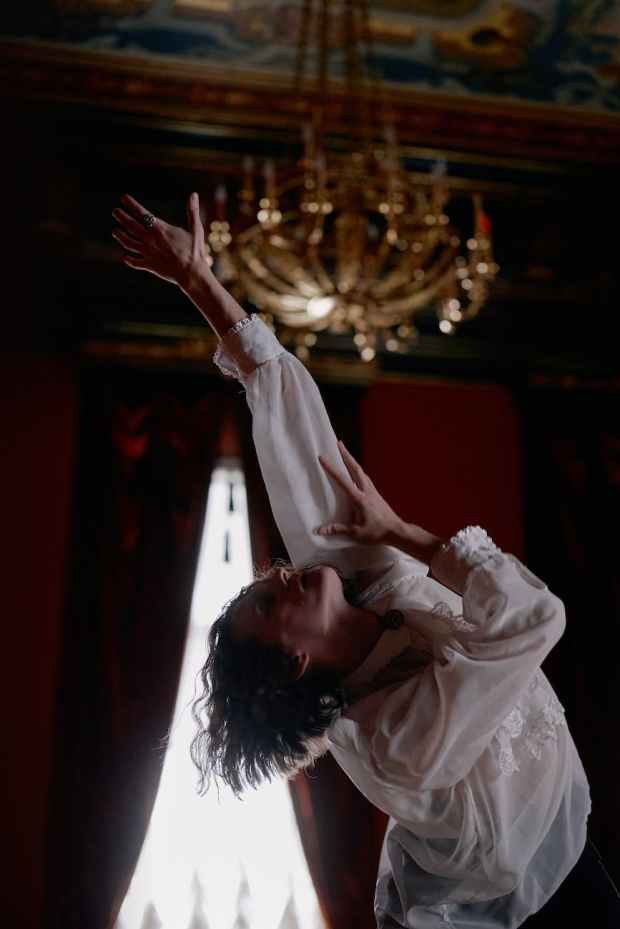
“I had to figure out who I was and really believe in that, and not believe in anything else.”
Jennifer Lopez, Halftime
The first time I saw Jennifer Lopez was in the early 2000s when I was beginning to watch films that were rated PG. I can’t remember if the first film I saw her in was the 2001 film The Wedding Planner, or Maid in Manhattan a year later, but what I do remember thinking is that she was one of the most beautiful women I had ever seen. I still think that as an adult woman approaching her 32nd birthday.
I have seen most of the films that make up Jennifer’s career, but her Netflix documentary Halftime is where we see her as herself. Like Taylor Swift’s Miss Americana, this documentary is deeply personal as Jennifer takes us into her life before and during her career, and the trials, tribulations, and triumphs she has faced along the way.
Halftime begins in July 2019, when Jennifer, her two children and her team are celebrating her 50th birthday on a tour bus, before cutting to six months later in Miami, where Jennifer and Shakira would perform the incredible Super Bowl Halftime performance that would blow up the Internet. “My whole life, I’ve been battling and battling to be heard, to be seen, to be taken seriously, and now I have this incredible opportunity to show the world who I am. How do I represent all of the things that matter to me? The world is listening. What am I gonna say?” she says in a voiceover as she prepares to take the stage.
What do you say when you are performing on one of the biggest stages in the world, and not there are spectators both in the stadium and at home? If you have the power to make people listen, to open their eyes to the bigger picture of what is happening in the world, how do you do that?
Something I really admire about Jennifer is that she shows that just because someone tells you you’re one thing, it doesn’t mean you are. “When I was a little girl, it was always ingrained in my head that I wasn’t the singer. My sister was the singer and my other sister was the smart one. I was either the athlete or the dancer. So I wasn’t smart or could sing,” she says before saying that she grew up watching musicals and that was her inspiration for pursuing a career in the arts. She wanted to act, sing, and dance. Jennifer dreamed of a life where she was on stage doing all those things, but her mother was adamant that Jennifer was going to get her education. That she was going to go to college and get her degree, and they had a big fight over it.
Education is important, don’t get me wrong, but what some people don’t realize is that not everyone wants to pursue a university degree or a trade. There are artistically gifted people, and Jennifer Lopez is one of those people. She left home at 18 to pursue her dreams of becoming a performer, and she began taking acting classes in addition to continuing to dance.
The documentary also follows part of Jennifer’s journey for the 2019 film Hustlers, and not only did she play one of the lead roles, she was a producer for the film. This is the movie that inspired me to get back into pole dancing.
“When I got Hustlers, it was exciting. It was gritty. It had substance. That is something that I fought for in my career. This is a film about women who had limited options and had to make hard choices. These characters remind me of women I knew growing up in the Bronx,” Jennifer says of the film. We’re shown part of the footage of the training she did at home to prepare for her role, with Johanna Sapakie as her coach.
When you go to watch a movie, what is the main reason you go? Sure, we can all say we’re going to see the latest rom-com, drama or action film, but the key reason I watch movies is to escape the real world for a while. I often connect with a character or a theme in the film; there is always a message attached to it, some deeper meaning that is there to say something to people. “As a producer, one of my goals is to make movies that entertain people but that also have something to say,” Jennifer says.
We then see the premier and press for Hustlers, before the documentary takes a significant turn into discussions about race and politics. We see footage of the NFL controversy surrounding players taking a knee during the national anthem of the United States and former US President Donald Trump weighing in with the statement, “Wouldn’t you love to see one of these NFL owners say “Get that son of a b**** off the field?” with the news headline: “This has nothing to do with race.” I have heard the latter statement before, or more accurately I have read it in Bloodmarked, the second novel of Tracy Deonn’s LegendBorn trilogy, and I share Briana Matthews’ opinion, “When white people say something’s ‘not about race,’ it’s usually because it is and they don’t want to talk about it.”
Benny Medina, Jennifer’s manager, says, “It was clear that the NFL was having public image concerns about racial representation. So, the commissioner brought in Roc Nation to advise.” Roc Nation is an entertainment company founded by Jay-Z that specializes in ventures of music, sports, publishing, and film and television, just to name a few.
Jennifer then backs up her manager’s statement with the observation: “It was actually really late for them to pick a performer. So, it was weird. Something weird was happening.” There were a lot of rumours swirling around that Jennifer would be performing at the Super Bowl. The NFL wanted a Latina to perform in Miami, and after all the speculation, it was confirmed that Jennifer would be performing but not alone. Shakira, whose hits include “Whenever, Wherever” and “Hips Don’t Lie,” would be joining her on stage.
In a phone call with Shakira, Jennifer delivers a profound and powerful statement about what they can do with the halftime show: “There is an amazing opportunity here to show who we are as performers but also show who we are as a community and also show the—Bring the world together. We can bring everybody together in this moment.” Across the divides of class, culture, and race, music and other art forms have a way of blurring those lines and bringing people together. Can you imagine how sad our world would be if singers, artists, and dancers kept their art to themselves? It’s what brings vibrancy, colour, and meaning to our lives, and Jennifer backs this up when she says, “There’s a lot at stake for me as a Super Bowl performer. You get to not just show people what you do as an artist, but you also have this opportunity to say something bigger.”
Jennifer is one of those people whose music has brought people together, and it is also how she knew she was going to share a message with the world at a time when tensions were high. In Miss Americana, Taylor Swift chose to voice her political opinions, and Halftime shows the moment where Jennifer does the same. She admits that she was not into politics, but she was living in a United States that was foreign and unrecognizable to her because it was divided in more ways than one by the wall with barbed wire separating Mexico and the U.S. border. The wall is a literal metaphor for the divide in the States because there are two opposing sides: the people who support Trump and his beliefs and the people who know that change needs to happen.
How deep does this conflict go? Deep enough that the documentary shows news footage of an old warehouse where the U.S. Customs and Border Patrol were keeping immigrant children in cages crated by metal fences. The footage that Jennifer saw on the news made her think hard about what she wanted to say, not just for the halftime show but in other areas of her life. “You don’t rip a child from their parents. There are just certain things as a human being you don’t do. What is my message, and what do I stand for? It made me realize that I have a responsibility to not be quiet, to not just leave the politics to everyone else,” she says.
When Jennifer saw the image of the cages on the news, she couldn’t believe what she was seeing. I couldn’t believe my eyes when they showed that footage. You do not put any living being, animal or human, in cages, and you don’t separate kids from their parents unless there is a valid reason.
We all have to speak up because silence allows the bullies whose corruption and greed for power to take over, but that can be countered when brave people step forward and challenge the narrow-minded views born out of hatred and bigotry with acceptance, compassion and understanding.
Jennifer is one of the most well-known public figures in film, music, and dance, and she made it this far because she worked hard and put in the time to be successful. “Having the upbringing I had, not growing up, like, around the business, I know what it is to get up and, you know, get on a train and work hard. Coming from the Latino community and coming from nothing, we’ve had to push harder than the normal person. We’ve had to work harder. We have to prove ourselves over and over,” she says before adding that her mom raised her and her sisters to be independent. Because of her upbringing and background, Jennifer is resilient with a great understanding of the value of hard work. To make it in life, you must have a solid grasp of both those things. You have to, or you live with regrets. Jennifer knew that, and she persevered in the face of obstacles.
When Jennifer was just starting out in her career, she reflects on her past and everything she experienced at the beginning. “As a young performer, every job that I got I did because there were so many in between that I didn’t get. Good roles for women of color were very limited, but I just kept grinding and believing that somehow, someway, I would get that shot.” The 1997 film Selena, based on the life and career of the Tejano singer was Jennifer’s breakout role, and it made waves because it broke a cultural barrier for pay for women. I remember seeing this movie when I was young and it may have been the first film of Jennifer’s I saw. In addition to being a cultural breakthrough, it was a big career step forward for Jennifer because, after Selena, she started to do music. She became the performer she had dreamed of being as a child. “My idea of success is always evolving, always getting a little outside your comfort zone and doing something different.”
Jennifer’s belief that success is not something you keep in a box, that you push yourself to explore new angles and take risks is a great thing to aspire to and be inspired by. We evolve as human beings when we take chances and embark on new endeavours, those are what make life exciting because we don’t know what we’re capable of until we start betting on ourselves. Elaine Goldsmith Thomas, Jennifer’s friend and former agent says, “She’s a dancer, who became an actor, who became a singer, who became a global icon. She is a woman of color who had the audacity to pursue her dreams.”
Sadly, the media’s interests laid not with Jennifer’s success but with how they could use her name and public image to their advantage. “No matter what I achieved, their appetite to cover my personal life overshadowed everything that was happening in my career. I just had very low self-esteem. I really believed a lot of what they said, which is I wasn’t any good. That I wasn’t a good singer, I wasn’t a good actress, I wasn’t a good dancer, I wasn’t good at anything. I just didn’t even belong here. Why wouldn’t I just go away? I felt like I was in this, like, really abusive dysfunctional relationship. When you’re with a guy who tells you, “No, you suck, you’re not good, you’re dah, dah, dah,” you feel you have no worth and value.” Does any of this sound familiar?
Just as Taylor Swift had to deal with the negative attention from the media, Jennifer had to deal with it when both Jimmy Kimmel and South Park made fun of her. You really wonder what goes through these people’s heads when they are getting ratings and laughs at the expense of another human being. Some people think it’s funny, but all I see are arrogant, ignorant people who don’t care about the impact their words and actions have on someone’s mental and emotional health. Ben Affleck, backs this up when he reminisces, “I said to her once, “Doesn’t this bother you?” And she said “I’m Latina. I’m a woman. I . . . I expected this. You just don’t expect it. You expect to be treated fairly.” When we expect abuse and unfair treatment, you know there is something wrong with society, and that something needs to change.
While Halftime is largely about Jennifer’s process of preparing for the Super Bowl Halftime show, Hustlers is also a prominent force because it was a project that meant a lot to her. She elaborates on her earlier statement of the film’s depth and level of reality, “This was a real labor of love, and it took us a minute to get it made. We knew it would be a fun ride for people and an enjoyable movie. And also, a movie that makes you think. It goes deeper than what you think it does. I realized there was a lot riding on me with this role. It was a controversial project and a risky part for me. This was the first time in a long time that I was actually terrified doing that opening number. I remember thinking, like, even though that’s scary, I perform in front of 30,000 people all the time. Three hundred is nothing. This was the first role where there was no hiding any part of myself. And I had to get up on this stage, not like I do at my concerts with tights and sparkly things on and all that. ‘Cause I wear sexy costumes. It’s not about that. It was different. It was a bearing of not just yourself physically but emotionally as well.”
I would say that sums it up, and the part about showing emotional and physical vulnerability is a large part of what pole dancing is. Physically, you’re in an outfit that shows a lot of skin, and if you’ve been following the stories I’ve written for The Empowered Pole Dance Project then you know that the reason we don’t wear a lot of clothes is that we need to be able to grip the pole with our skin. Emotionally, you’re opening yourself up to whatever you’re feeling at the moment, and it’s a very vulnerable position to put yourself in because there is a significant emotional level of truth in pole dancing. Things that you have pushed down in an attempt to try and forget come up again when you dance.
After the amount of negativity Jennifer got from certain television shows, I was glad to see Jimmy Fallon did not diminish her success. If you asked me who I would want to be interviewed by on a talk show, I would say Jimmy Fallon every time. He’s respectful, he doesn’t degrade or humiliate his guests, and he congratulates them on their success. That’s the kind of positive content we need to see, not the toxic atmosphere where people are judged for their body, their personality, or their dating history.
As the dance rehearsals for the Superbowl begin, we meet Paris Goebbel, Jennifer’s choreographer, and her music director, Kim Burse. At the time of the documentary, Kim had been working with Jennifer for eight years, and the first thought on Kim’s mind was, “How am I editing all these hits?” The editing process is an arduous, messy one that at times makes you want to pull your hair out, so I fully sympathize with Kim! It’s tedious, but the final product must be polished.
Before one of the dance rehearsals, Jennifer finds out that Hustlers has been nominated for a Golden Globe, and the dancers cheer for her because they know what an accomplishment that is. Being nominated for an award is one of the best ways to say, “We see you and your commitment to your craft.”
Because Jennifer has been in this business for so long and she has a strong background in dance choreography, she has a very clear picture of what she wants in a performance, including the stage. “It’s the creation process. You can liken it to a painter doing a painting and how they get all the, you know, stuff under their nails, and it’s on their face. It’s the same thing when I’m creating a show. It’s not always pretty, but I’m always clear about what I want the end to be,” she says.
Dancing is one of the ways we tell stories, and we tell those stories with our bodies. We convey our emotions through facial expressions and movements, and Jennifer knows that. She knows that what she decides is what people will see. “When I’m in the creation part of the show, it’s messy and it’s passionate, and it’s visceral, and I’m looking for a feeling. I’m looking for it to feel like something and look like something and sound like something and be perfect in every moment to moment.” Attention to detail is essential for great performance because that’s what the audience takes note of. From the choreography to the costumes to the level of emotional connection and the other aspects of what pulls a show together, everything has to mesh together. There can’t be something that doesn’t fit like a misplaced puzzle piece because it will just throw everything off.
“When I’m putting a show together, it’s on my mind 24 hours a day. And inspiration can come from anywhere,” Jennifer says. All artists can attest to being struck by a lightning bolt of inspiration, and those often come when we most need them. I have lost track of how many times inspiration has broken me out of writer’s block.
For Jennifer, inspiration strikes while she’s watching her daughter’s friend’s dance class at Dance Town Studio. As she’s watching and dancing along, she sees how skilled the kids are, and that’s when she has a brainwave for the performance: she sees them on stage at the halftime show. From that moment, everything else falls into place. She tells Ricky Kirshner, an NFL producer and other NFL executives that the message she wants to send through her performance is, “This girl from the Bronx and this girl from Barranquilla somehow land on this stage. And here we are to represent our culture, our music, and women everywhere. We were thinking maybe a great moment would be to have these fantastic little girl dancers I just met along with hundreds of other girls in light cages.”
The cages, of course, are an acknowledgment of the treatment of immigrant children who crossed the border with their families in the hopes of finding a better life and instead, they were treated inhumanely. The presence of the women’s symbol and the cages are saying that “This is a dark subject matter, but if we can get the message across in a beautiful way, where it’s soft, and it can be received, then maybe more people get the message.” In addition to the girls joining Jennifer on stage, she also wants her daughter Emme to join the performance and sing “Born In the USA” in the finale.
Halftime’s strong focus on the Super Bowl and Hustlers results in the documentary bouncing between the two. While Jennifer was prepping for the Super Bowl, she was also flying back and forth every weekend for Hustlers press and Awards Season, the latter of which she describes as a circuit and campaign before adding, “If you don’t do it, they make you feel like you don’t have a chance.” It took her 20 years in the business, and 25 to 30 movies to get to the Golden Globes. She had never done the awards season circuit before, so this was a new experience for her.
At the Palm Springs International Film Festival, Jennifer receives the esteemed Spotlight Award. The women in the room are all showing their backing of her and her hard-earned recognition through their cheers and applause. “I was offered an opportunity to shine a light on women who are usually spinning on the periphery of the action. Ramona was a mass of contradictions, a female character with the type of depth that is usually reserved for men in Hollywood. And to all the talented women out there, writing films, producing films, and directing films, support one another and tell your stories. And remember, “no” is not an answer. It’s an opportunity,” is the beautiful, inspiring acceptance speech she gives.
Those last words have stuck with me ever since I saw this documentary for the first time, and I repeat them to myself every time I have a job application rejected. I used to get very depressed every time I was ghosted or turned down, and I would wonder what was so wrong with me that people wouldn’t even give me a chance. It took some time and a lot of negative responses to realize that just because some people don’t think I’m good enough, that doesn’t mean others will think the same way. Some day soon, somebody is going to see my writing and say, “She’s what we’re looking for.”
In the stories I have written for the Empowered Pole Dance Project, it has been mentioned more than once how pole dancing has brought acceptance of sexuality and sensuality, and how that has helped the dancers I’ve worked with step fully into their power. In addition to Hustlers telling its story, it shows the transformative power of pole dancing. “I’m a 50-year-old actress who has the biggest hit of her career playing a stripper,” says Jennifer. “A woman who embraces the power of her sexuality and turns the way women are objectified on its head. I wanted to put all of that onto that Super Bowl stage.”
I think every character you play influences your life a little bit, and Jennifer’s role in Hustlers is a testament to that. Johanna Sapakie, Jennifer’s coach for Hustlers, joins the choreography process and brings her pole expertise to the Superbowl rehearsals when she shares that they used a silicone pole to help Jennifer get the hang of the pole.
Halftime is an inspiration because it shows Jennifer’s work ethic, and her level of commitment to the projects she takes on, and it has a strong message about what it means to be a woman in today’s world and the double standards that we face every day. “We’re celebrating women in every sense of who they are. For being smart, for being strong, for being sensual. I think, sometimes, as women, we think, “If I’m too sexy, I won’t be taken seriously.” You cannot just cancel out different parts of who you are. They can all coexist and be very authentic and real,” says Jennifer.
We saw in Miss Americana how the media’s opinions of Taylor’s body affected her, and how she was body-shamed for being too skinny. It’s a sad truth, but body image shaming occurs in everyone’s life, whether you’re a woman or a man, but the ones that we hear about the most are women being body-shamed if they don’t meet the societal expectations of beauty.
Taylor was body-shamed because she was too skinny, and Jennifer was body-shamed because she was curvy. A photoshoot for Fly Girls was postponed, and one of the girls who worked with Jennifer was the one to tell her, “They’re waiting for you to lose a little weight.” And Jennifer’s rightful response was “Excuse me?” There aren’t enough words in the English language to describe how utterly degrading it is to hear that you need to lose weight, whether you’re a woman in the workplace, in your own home, or a Hollywood actress.
Unfortunately, that instance wouldn’t be the last time that Jennifer was body-shamed. “When I started working, the beauty ideal was very thin, blond, tall, not a lot of curves.” Because Jennifer had a different body than what was accepted as the ideal, it made her the target of a lot of unwelcome and very offensive attention. TV show hosts and others made jokes about her ass, with one man having the audacity to ask her “How do you feel about your butt?”
If I had had something in my mouth when that interview was shown, I would have spat it out. There is NO excuse for that! There is never a moment in time where that is OK. It’s sexist, degrading, and completely unnecessary. I truly wonder if these people don’t realize that their words have the potential to cause an eating disorder and act as a trigger, because all it takes is one rude comment for someone’s self-esteem to plummet and go to dangerous lengths to fit the unrealistic ideal of beauty. I have seen one too many interviews where actresses are asked demeaning, chauvinistic questions by male interviewers about what they have done to lose weight for a role or what underwear they are wearing. I mean, really? Come on!
I think the curves of a woman’s body are what make her beautiful. I have curves, and it took me a while to accept them because of the beauty ideal. Once I tossed that out, I began to accept my body for what it was. Despite all the body-shaming crap that Jennifer was subjected to, she was not ashamed of her curves, and she proudly flaunted her healthy figure in the iconic green dress by Donatella Versace at the 2000 Grammy Awards. Of course, that became another thing for people to bully her about. Matt Lauer, the former NBC news anchor who was fired in 2017 after accusations of sexual harassment and assault, and the American actor and co-creator of South Park Trey Parker, made fun of Jennifer by dressing like her in the green dress, complete with long wigs, makeup and jewelry. “It was hard when you think people think you’re a joke. Like you’re a punchline. But I wound up affecting things in a way that I never intended to affect them,” she says. In 2020, Jennifer once again donned the green dress, with some new additions, to strut her stuff at the 2019 Milan Fashion Week, showing off her beautiful curves and body.
The night of the Golden Globes arrives, and Jennifer’s hair and makeup team are cheering her on as she departs for the awards show. She loses the Supporting Actress award to Laura Dern, and Jennifer is very open about what it is like to lose after you’ve been nominated. “I really thought I had a chance. Felt like I let everyone down. They wanted it so bad for me, for them. I mean, it’s a validation of all the work that they do too. Most of them have been with me for 20 years, since Selena.” That’s a long time to be with someone, to be there for the good times and bad.
Jennifer is in her 50s and she is in amazing shape. As the Super Bowl draws closer and the dance rehearsals intensify, Jennifer shows just how well she knows the importance of a strong dance performance. “Watch the mirror. That’s what I do when I’m trying to catch you guys’ groove,” she tells the dancers. “You gotta watch each other in the mirror. Part of being a great performer is being aware, being aware of everything. Who’s on stage with you, where the light is at that time, who’s next to you. It’s not just about if you’re getting off with the step. It’s about if we’re getting off with the step.”
At the rehearsal with Shakira, we meet Adam Blackstone, the NFL music director, and see how much work went into the performance. We’ve been aware of the creation process of the show and Jennifer’s desire to do something great at the Superbowl ever since it was announced she was performing, but this is the moment where all of that truly comes to light.
Like Taylor, Jennifer is a very prominent public figure, and everything she does is scrutinized and judged. That kind of attention can have an impact on your mental health and cause you to walk around on eggshells if you’re the kind of person pressure really affects. Some people bend under pressure and some do not let it affect them in company. “I’ve lived in the public eye. One of the things I’m proud of is that I’m able to hold it together in front of everybody, without anybody knowing how I feel. Even now, I’m not gonna get into what my relationships were like. But in how it relates to me and the journey that I’ve been on, I had to learn that the key was not so much about other people but about yourself,” Jennifer says before continuing, “As an artist, I kind of lost a little bit of who I was in trying to build a perfect life, a family life. And when my kids were three, I got divorced. I was a single mom with two little kids. At 42, movie roles were not knocking down my door. As I was getting back to work, I really felt like I didn’t know what my value was anymore.” Taylor said in Miss Americana that women in the entertainment industry are “discarded in an elephant graveyard by the time they’re 35.” I don’t work in the entertainment industry, but after hearing Jennifer say that I realized just how accurate Taylor’s statement was.
“I was doing American Idol. That was the first big job I did after I had the babies. And it was good for me at that time. People could see me for who I was, and that changed everything. I really learned a lot about myself. I had a purpose. And I just felt I’ve got to work on my acting more, my singing more, my dancing more, my everything. I just need to be better in every way. You know, you have those moments in this business where you’re like, what’s next? And will anything be next? “Jennifer says. Every person who does not work a nine-to-five and has pursued a creative career path has those moments. I have those moments and I live with that fear. You do ask yourself those questions.
Jennifer is presented with an award by the Los Angeles Film Critics Association, but her joy over that is short-lived when she is snubbed by the Oscars, not just her but also other women and people of colour, none of whom received an Oscars nomination. It’s dehumanizing and demoralizing to be slighted in any scenario, but when gender and race play a role in being cold-shouldered, it’s ten times worse.
“The truth is, I really started to think I was gonna get nominated. I got my hopes up because so many people were telling me I would be. And then it didn’t happen. And I had to ask myself, what does that mean? I do this not for an award. Or to do my hits up there and seem like I’m the best performer in the world. No, I do this to tell stories. And to effect change and to connect with people and make them feel things because I want to feel something. That’s why I do it because I actually want to make the world a better place in my own little way. At the end of the day, when somebody meets you, they don’t go, “Oh my God, you have 12 Grammys.” They don’t say that. They go, “Oh my God, that song you wrote made me feel and got me through. When I saw you on stage, I realized I could be there too.” I’m gonna keep working. And I’m gonna be unafraid to get loud and use my voice in the best way that I can,” Jennifer says about her disappointment over the loss and her reminder to herself about why she’s in this business.
I know what that feels like, I know what it is to work hard and pour your heart and soul and energy into something, and not have it be recognized. It’s soul-crushing and it does make you question yourself and whether you’re good enough. I said earlier that you can’t give up after repeated failures, you have to keep going. I write for the same reasons that Jennifer performs. Recognition is nice, but what matters more is the feeling of knowing you are making a difference in someone else’s life, whether you know them or not.
One thing that blew my mind was Jennifer’s ability to stand firm in what she envisioned for the Super Bowl when there were so many people telling her no, she couldn’t do this and she couldn’t do that. “It’s been a nightmare since we started,” she says on the phone before continuing, “The finale can’t be just one minute. It’s a song. It has a build. I’m trying to give you something with substance, not just us out there shaking our fucking asses and fucking belly dancing. I want something real, something that’s gonna make a statement, that’s gonna say we belong here and that we have something to offer. That’s what I want to do, and that’s what I’m trying to do.”
Part of the reason people watch the halftime show is because they want to be entertained, but also because the songs resonate with them in some way. The reason Jennifer is so determined to “give something with substance” is because she knows that the people watching will see themselves represented, and every woman and young girl watching will see women performing at the full height of their power and not for the sake of being eye candy.
One of the things I really loved about Halftime was seeing the girls from Dance Town at the rehearsals and their amazement at seeing the Swing Latino dancers. You never know who you’re inspiring, and these young dancers are seeing what they can be if they keep dancing and improving.
At one of the final rehearsals for the halftime show, Jennifer has Emme climb inside one of the cages that are going to be on stage. “I wanted Emme to sit in the cage. Putting her on that big stage, although it would seem, like, scary for a lot of people, she doesn’t feel nervous because she’s next to me. So she knows that she’s going to be safe up there. I said, “You look right down that camera, and you tell every little girl in the world to get loud and to never ever back down from bringing light to injustice.” And so that was . . . That was a big part of it for me.” After saying this, Jennifer is so overcome by emotion and the importance of standing for what you believe in.
Of course, because the NFL was already fighting Jennifer on everything performance related, they took it one step further when they called Benny, who in turn called Jennifer to tell her that the NFL wanted to pull the cages. “That night, the higher-ups at the NFL saw it for the first time, and they’re like, “Hey, you can’t do that,”” Jennifer says. We then hear from Benny about how they were concerned about making a political statement about immigration. They’re worried about Jennifer and Shakira doing that for their performance, but they’re not disturbed by children being taken away from their parents and kept in literal cages?!
After that, there are news headlines about the NFL supporting Trump, and I am inclined to agree after seeing those headlines in the documentary. “For me, this isn’t about politics. This is about human rights. I’m facing the biggest crossroads of my life, you know, to be able to perform on the world’s biggest stage. But to take out the cages, and sacrifice what I believe in would be like never being there at all,” Jennifer says the night before the performance.
If you watched the 2020 Superbowl halftime show, then you know how spectacularly iconic it was. Jennifer is joined on stage by pole dancers, including Johanna, with Shakira rocking out on the drums as Emme and Jennifer encourage the audience to “get loud.” The resulting outcome is positive headlines from The New York Times, The Washington Post, Variety, and CBS News. Jennifer won the Super Bowl because of her incredible talent and steadfastness in what she believes in.
Jennifer Lopez is a force to be reckoned with, and an inspiration because she shows that no matter where we come from, we are all capable of success when we commit to a goal and put in the time and effort to get there. She has inspired me to keep speaking up and out and to continue standing alongside other women instead of against them. It’s 2023, and it’s time to make women supporting women the new normal instead of pitting us against each other.
Thanks for reading!
Until next time, xoxo

