Written By: Lauren Long
Date Published: May 8, 2024
“I feel as though being part of this family, it is my duty to uncover this exploitation and bribery that happens within our media.” ~Harry, Duke of Sussex in Harry and Meghan
When I watched Harry and Meghan’s documentary for the first time, I was unprepared for the vulnerability shown by both of them in sharing their story. Nor did I know how open Harry would be when talking about his mental health as he struggled to balance his royal persona and as a young boy grieving the loss of his mother.
“We wore two hats, grieving sons in private, but in public we had to assume the royal hat and show no emotion. We were expected to get out there, meet people and shake hands.” A longtime friend of Harry’s says because they were young at the time of the tragedy, he was unsure of how to approach Harry, calling it “an emotional hot potato,” because the two personas Harry had to balance led to complicated mental health.
When Princess Diana died, Harry was 12 years old, and William was 15. There are only six years between myself and Harry and, ironically enough, I experienced a family death for the first time at 12 years old. I can fully understand the “emotional hot potato.”
When we’re younger, it can be difficult to find the words to talk about death and the grieving process. During the first few months after my grandpa died, my friends wanted to help, but none of us really had the communication skills at that time to take it any further than, “How are you?” and “Fine.”
I understand and empathize with Harry’s grief at losing his mom so young because I experienced the same grief with my grandpa and I didn’t know how to express it. I can’t imagine what it must have been like for Harry and William to act like everything was fine in public while crying on the inside, and be in the public eye and have the attention of the media focused on them.
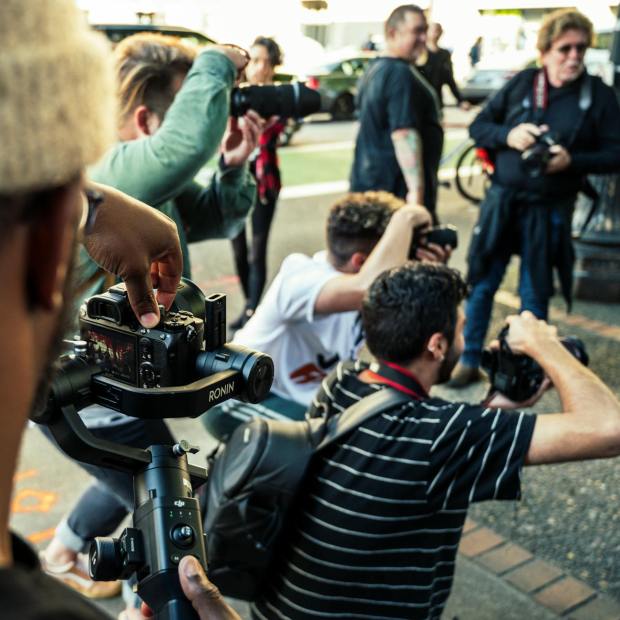
The press was not sympathetic to what Harry and William were going through, because once they were both at school, everything that had happened to Diana started happening to them. Harry said earlier that Diana always tried to protect them from the press, and I feel as though once that protection was gone, the paparazzi thought they had the right to invade Harry and William’s lives.
Harry remembers just how aggressive the press was. There was constant news coverage of him and his brother, the paparazzi would swarm them when they were out and about, chase them through red lights or chase on foot, and Harry says this happened 30 to 40 times when he was younger. He was a young boy who hadn’t had a chance to properly process the grief over his mother’s death, he had no help, support or guidance, and he finally snapped on the press one day saying, “Why don’t you just leave me alone?”
Yes, why didn’t you leave him alone? Why do you think you have the right to chase after two young boys who lost their mother because of people who work in the same industry as you do and constantly put their lives in danger?
In addition to the journalists and authors, former palace employees are also interviewed. We see footage of Queen Elizabeth’s crowning ceremony and her first public address, followed by a statement from a former palace employee that, “the royal family has popularity ratings of a staggering 60% – 80% and politicians would die for that kind of status.”
Each year, the royal family makes between 2,000 to 3,000 royal visits, and the press offices are covering these. The royal family is very popular, so this means that there is constant publicity of their lives and it’s the job of the press offices to ensure that the publicity is good.
The publicity for Harry was the opposite of that, and Harry remembers very clearly what the headlines about him were like. I can’t imagine what it would be like to have the spotlight on you all the time and have everything that you’re doing reported, be it taking drugs, drinking, leaving a nightclub in the early hours of the morning, and doing those things because you want to numb the pain and the grief you feel.
But drinking and drugs can only keep emotions at bay for so long, and a time comes when you have to decide what your next step is going to be. Do you continue this behaviour? Or do you choose to let other people in and let them help you heal?
For Harry, it was the second option. To get away from the public eye, he left the UK for South Africa, where he found more than an unexpected sanctuary.
To Be Continued. . .
Thanks for reading!
Until next time, xoxo

