Written By: Lauren Long
Date Published: July 31, 2024
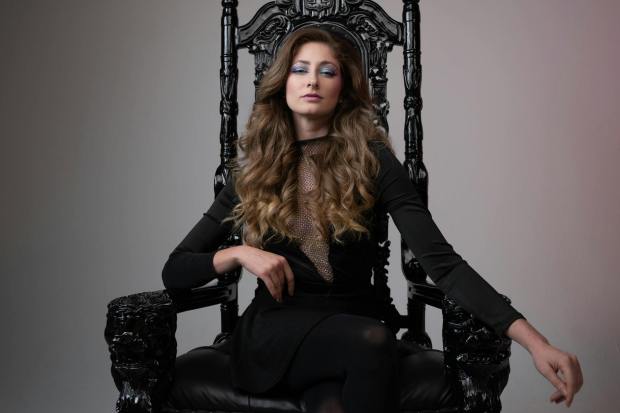
“We all bear scars,…Mine just happen to be more visible than most.” ~Celaena Sardothien, Sarah J. Maas, Throne of Glass
Spoiler Alert: This post contains spoilers for Throne of Glass. Do not proceed if you have not read the book yet!!
Hello all, Happy Wednesday! As we head into August, I thought I would finish off July with Throne of Glass, the first book in Sarah J. Maas’s Throne of Glass series.
I bought this book after my cousin gave my sister A Court of Thorns and Roses, and I wish I’d discovered this author and her work sooner. As with Anne Fortier’s Juliet, there was more than one night when I stayed up reading because I was so engrossed in the story.
When I read the book’s back cover, I was reminded of Suzanne Collins’s Hunger Games, because the main character must compete against twenty-three other competitors, a mix of murderers, thieves, and warriors. The prize? To serve as the King’s Champion.
The book centers around 17-year-old Celaena Sardothien, one of the competitors in the contest and well-known as Adarlan’s Assassin. The more I read, the more Celaena reminded me of Natasha Romanoff/Black Widow from the MCU. Celaena and Natasha were both trained from a young age to be assassins, often subjected to brutal, sadistic training methods by their trainers/masters. Each of these women has been dealt a lousy hand, and Celaena and Natasha both have trust issues because of their upbringings. Despite everything they have endured, Celaena and Natasha have both kept their hearts.
Celaena is enslaved in the Endovier Salt Mines when the story opens, and the words she has repeated to herself through her yearlong enslavement are “I will not be afraid.” Even though she’s been through hell and she’s witnessed things in the death camp that have traumatized her and continue to through nightmares, Celaena never gives up. She knows that the moment she succumbs to fear, that will be it. In unimaginable circumstances, she shows great bravery and compassion, because her fellow prisoners treat her with kindness and courage, none of them have left their humanity behind.
As the book progresses, it’s interesting to see how Celaena’s relationship with Captain Chaol Westfall, the commander of the King’s Guard, develops. When they first meet, Chaol treats Celaena better than some of the other men who come to get her from Endovier, but at the same time, he doesn’t trust her because of her past as an assassin.
However, Chaol’s sympathies begin to turn as he and Celaena’s relationship develops from tolerant on his part, teasing on hers, to something hovering between platonic and romantic. Chaol is one of the few people that Celaena really opens up to, and as he hears more of her life story and just how bad the conditions are in Endovier, Chaol begins to feel more sympathy for her and anger at the King, and he starts to understand her.
Every interaction that occurs between Chaol and Celaena perfectly depicts the many shifts in their relationship from the moment they leave Endovier to their time in the castle. I could so clearly see the subtle development of romantic feelings between the Captain of the Guard and the assassin, and the way Sarah writes their relationship felt organic and natural to me.
Chaol is not the only person that Celaena grows close to as she trains for the competition, she also finds friendship with Princess Nehemia of Eyllwe.
The connection between Celaena and Nehemia is a plot point, but it’s also a friendship and alliance forged between two strong women who know of the Adarlan King’s injustice and cruelty, and in their own ways, subtly rebel against it. These women are both outsiders in the palace, Celaena is an assassin who endured and witnessed torture at the salt mines and has now come to win her freedom. Nehemia is royalty from a faraway kingdom and is rumoured to be one of the Eyllwe rebels’ suppliers. In their own ways, they protect each other, and as their friendship progresses, Celaena begins to realize that there are people she can trust.
Like Natasha Romanoff, her life experiences have taught her to be suspicious of people and not let them in, because she feels that the only person she can truly count on is herself. With Nehemia, Celaena’s walls begin to lower, and she acknowledges that deep down, she does wish for close friends who she can trust and depend on. It’s the same with Chaol, Celaena begins to trust him because he protects her and watches her back in and out of training.
Sarah J. Maas’s Throne of Glass is a story about humanity, greed for power, and human connection, as well as the valuable lesson of not judging someone based on their background, but rather on who they are as a person. I’m looking forward to covering the rest of this series, as well as Sarah’s other books.
Thanks for reading!
Until next time, xoxo

