Written By: Lauren Long
Date Published: November 18, 2024
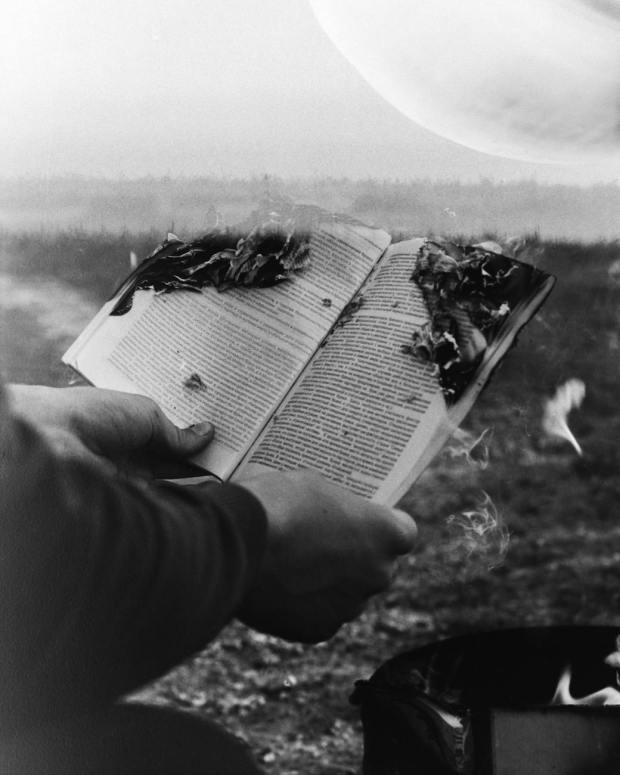
“Restriction of free thought and free speech is the most dangerous of all subversions. It is the one un-American act that could most easily defeat us.” ~ Supreme Court Justice William O. Douglas
There are many definitions for the meaning of censorship:
- Reader’s Digest Webster’s Dictionary and Thesaurus: an official with the power to examine literature, films, mail, etc. and remove or prohibit anything considered obscene, objectionable, etc.
- Cambridge Dictionary: the action of preventing part or the whole of a book, film, work of art, document, or other kind of communication from being seen or made available to the public, because it is considered to be offensive or harmful, or because it contains information that someone wishes to keep secret, often for political reasons.
- Cambridge Dictionary #2: A system in which an authority limits the ideas that people are allowed to express and prevents books, films, works of art, documents or other kinds of communications from being seen or made available to the public, because they include or support certain ideas.
- Oxford Languages: the suppression or prohibition of any parts of books, films, news, etc. that are considered obscene, politically unacceptable, or a threat to security.
In one way or another, these four definitions connect to the content of this article.
I started thinking more about censorship and its dangers while I was reading Brianna Labuskes’s The Librarian of Burned Books. How the Nazis sought to enforce “pure” Aryan thinking by burning books they felt were not sufficient for their cause.
While I haven’t heard of any book burnings recently, I have heard of book bans being enforced, one very recently. This past summer, The Guardian reported on the state of Utah’s ban on 13 books from public school classrooms and libraries. Of the seven authors whose works were removed from the shelves, six of them were women. The authors are Sarah J. Maas, Margaret Atwood, Rupi Kaur, Judy Blume, Ellen Hopkins, Elana K. Arnold and Craig Thompson.
Margaret Atwood’s Oryx & Crake was banned because of its unbiased profound material, while Rupi Kaur’s work focuses on self-empowerment and challenging taboo topics of violence, abuse and femininity and rape.
Sarah J. Maas’s A Court of Thorns and Roses series has been banned because her teen female protagonist is sexually active. Judy Blume’s Forever is on the list because of its sex scenes and the promotion of birth control in the form of Blume’s protagonist Katherine.
From where I’m standing, these books have all been banned because of the material and the idea of teenagers exploring their sexuality. By taking these books away, there is a disservice being done to today’s youth. We were all teenagers once, and every teenager is curious about sex, and banning books isn’t going to stop them from getting the information elsewhere, and those could be reliable sources or misinformation.
Having been working my way through Sarah J. Maas’s Throne of Glass series since the summer, I would say that she explores the theme of censorship in the earlier novels with the Adarlan King’s decree of banning magic, with dire consequences for any who are found practicing or even talking about it.
Author Stephen King’s two cents? “Don’t spend time waving signs or carrying petitions around the neighbourhood. Instead, run, don’t walk, to the nearest nonschool library or to the local bookstore and get whatever it was that they banned. Read whatever they’re trying to keep out of your eyes and your brain because that’s exactly what you need to know.”
In his 2022 article “Parenting and Censorship in the Schools,” Solomon D. Stevens says “Censorship in schools is therefore the worst possible thing for our children. We do them a disservice if we try to keep them from feeling uncomfortable when their beliefs are challenged, even if those are our beliefs as well. And if we keep them from learning about the darkest moments in our nation’s history, they will not be able to understand today’s world. They need to read novels that reveal the beauty in the world around us and the ugliness of which human beings are capable. They must confront racism, sexism, antisemitism and other forms of hatred and prejudice. They need to ask questions about gender.
We are not showing them the respect they deserve if we focus on trying to indoctrinate them rather than inviting them to think for themselves. Laws that prohibit specific topics, books and even discussions from the classroom limit the ability of our children to think. If we want to bless our children by giving them the strength and wisdom they need to be independent, then we have to restrain our desire to always be protecting them.”
I strongly recommend reading the full article, it is insightful, and profound and connects to a lot of what I’ve said.
What do you think? Is censorship beneficial or harmful, or a mix of both?
Further reading:

