Written By: Lauren Long
Date Published: February 5, 2025
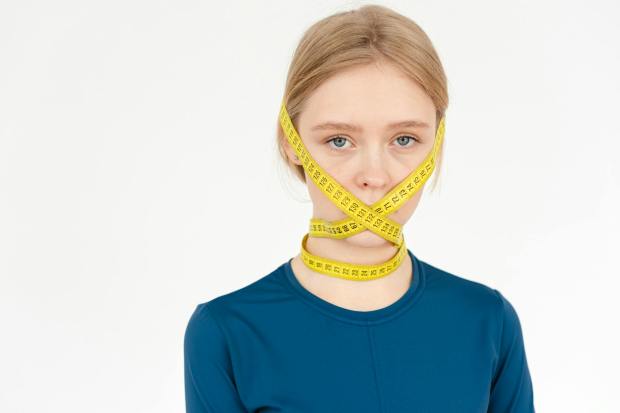
“Girls developed eating disorders when our culture developed a standard of beauty that they couldn’t obtain by being healthy. When unnatural thinness became attractive, girls did unnatural things to be thin.” ~Mary Pipher
Trigger Warning: This article talks about eating disorders and the methods used.
The post you’re about to read is one of my university essays. I wrote “Eating Disorders in Young Women, Models and Dancers” in March 2014 for my Introduction to Health Psychology class. February 1-7 is Eating Disorder Awareness Week in Canada, and I decided to share this in honour of that.
Many studies have been done on eating disorders to determine why so many young women, mainly in their adolescent years and late teens, runway models and dancers put themselves through this dangerous process. The risk factors contributing to eating disorders include pressure from peers, parents, and coaches, the influence of social culture, different devices that are used to control body weight, and the resulting lifelong health problems from having anorexia nervosa or bulimia nervosa. Polivy & Herman (2004) say:
One source of vulnerability lies in a woman’s body image. To the extent that a woman’s self-image is challenged or threatened by an unattainable ideal of an impossibly thin female physique, she may well become susceptible to disruption of her self-regard and may be more likely to develop an eating disorder (Polivy & Herman, 2004, p. 2).
To understand how eating disorder risk factors define the lives of these young women, the demands of peers, parents, and coaches to force these young women down a path of slow self-destruction should be taken into consideration.
Toro, Guerrero, Sentis, Castro & Puértolas (2009) conducted a study at the Barcelona Theatre Institute’s Dance Conservatoire; with a study group of 76 girls aged 12 to 17. Toro and his colleagues found that:
Fewer dancers believed that they would have more friends if they lost weight, the statistics of 3.9% vs. 17.8%. However, others felt pressure from their peers to change their figure, either by gaining (17.1 vs. 3.1%) or by losing (9.2 vs 1.3%) (Toro et al. 2009, p. 43).
In addition, the researchers discovered that teenage girls from the general population experienced more high-risk social situations, such as a strict eating regimen in their household and criticism and teasing from both family and non-family members. Dancers and non-dancers alike face the criticism of parents and peers regarding what is viewed as an “acceptable” physique. Toro et al. also cite Smolak, Levine & Schermer (1995) in their article in their comparison of families and coaches, stating the latter should, like their students’ families, avoid criticisms, disapproval, comments or jokes about the body, weight or food and should act with care and empathy. Should this professional advice be followed by coaches and families, more compassion and understanding towards young women would be shown, possibly resulting in the abstinence of pursuing dangerous behaviours.
Haywood (2013) also references this in models, citing a 2008 review by professors Shelly Grabe, L. Monique Ward and Janet Shibley Hyde in which they established that repeated exposure to the thin ideal negatively impacts body image in girls and women and plays a significant role in low self-esteem and disordered eating. Haywood also references social anthropologist Kate Fox, who confirmed in her 1997 summary of body image research that only 5% of women actually fit this narrow ideal. Only 5%, yet more and more women are pushing themselves to the destruction of their health by trying to mould themselves into this ideal body image. Toro et al. and Haywood’s research clearly shows that some changes need to be made. Young women need to be shown influential healthy women who are comfortable in their own skin and do not fit into the 5% thin ideal. Social culture also plays a role in how these girls view themselves, namely viewing magazines and other sources of advertising that are constant exposure to the thin ideal and leading to an increase of self-doubt and low self-confidence.
Social culture also contributes to the development of eating disorders. Polivy & Herman (2004) state:
The source of widespread communication of the message that thinness is desirable (and conversely that fatness is not) is the media magazines, television, movies, etc. Ubiquitous ultra-slim models, actresses, and other media figures, and almost the complete absence of heavier women in media, send a clear message to Western women that to be attractive, desirable, and successful, they must be thin (Polivy & Herman, 2004, p. 2).
With this kind of message being broadcast, it is no surprise that young women, dancers and models alike become the victims of the vicious cycle called eating disorders.
Ballet dancers are the primary focus of the study conducted by Estanol, Shepherd & Macdonald (2013):
For dancers, their performance is based on subjective opinion rather than objective numbers (i.e., points scored), which can lead to increased anxiety and excessive concern about evaluation. Additionally, body type and appearance play a significant role in determining performance quality and add to the stress of the dance environment. (Estanol, Shepherd & Macdonald, 2013, p. 212).
The results of these stressors are ballet dancers who look unnaturally slender and are literally forcing themselves to look perfect to fit the social expectations for their sport. Estanol et al. refer to Jordan et al. (2008), who conducted a study on ballet dancers and their findings were that 55% of those with anorexia nervosa (AN) and 50% of those with bulimia nervosa (BN) qualified for an anxiety disorder diagnosis. These are troubling statistics. The percentage of ballet dancers with eating disorders and possible anxiety disorders is appallingly high. Equally horrifying is the effect the social population’s critiques and judgments have on the dancers.
Teenage girls also suffer from peer pressure. Halpern, King, Oslak & Udry (2005) explain that desired social success (i.e., dating or having a boyfriend) may actually do little to alleviate weight concerns for some adolescent girls, but that sexual experience may not necessarily aggravate concerns.
Girls in their early through late teens are taught by the media that thinness, beauty and sexiness heighten their chances of establishing a romantic relationship. Sexual desirability compounds the problem of having an eating disorder; female teenagers see ads of women dressed in seductive, sexy lingerie promoting their sex appeal, with perky breasts, toned legs and arms and a flat stomach on display.
These young women do not realize that these photos are airbrushed and the models’ bodies have been digitally altered into the “ideal” body for women. Consequently, the viewers begin the process of attempting to look exactly like the media models. They are influenced by these images and believe that this is the only way to be popular; if they exercise excessively and restrict eating portions, eventually they will begin to emulate the models they are exposed to daily on billboards, posters, magazines, television and movies. They do not realize that by going to extremes in their diet and behaviour they are putting themselves at risk. Halpern et al (2005) state that an emphasis on healthy and strong body types in both the popular media and structured educational contexts is needed to facilitate the physical and emotional health of adolescents. The promotion of healthy role models in the popular media would help girls and young women recognize that exercise and a healthy diet are better and safer choices to achieve their body goals and feel beautiful.
For models, the pressure to be thin comes from those who came before them. Halpert & Warren (2004) say that:
The image of the curvaceous pin-up of the ‘60s has been replaced by the waif-like runway model as the icon of female beauty. This idealization of a slim figure has produced a generation of weight-obsessed adolescents and young women (Halpert & Warren, 2004, p. 13).
Models and adolescent girls alike see the thin ideal icon for feminine beauty and strive to be like them, changing their diets and moderate exercise routines to rigorous ones, causing them to be unnaturally thin and unhealthy. The deprivation of nutrients that their bodies need to function and work properly does not occur to them on their quest for thinness. The consequences of anorexia nervosa and bulimia nervosa may include going into the hospital or a treatment centre because their bodies have shut down due to deprivation of dietary sources of energy and the devices that are used to control the eating disorder. These are horrifying at best, but they need to be brought to light to provide greater knowledge and awareness of the dangers of eating disorders.
Penniment & Egan (2012) declare that:
There is strong evidence that perfectionism is a risk factor for eating disorders. Women who engage in dance training have been reported to be at risk for eating disorders, and it has been hypothesized that expectancies about thinness and restricting food intake are formed partly as a result of exposure to thinness-related learning (TRL) experiences in their environment which may increase their risk . . . dancers spend innumerable hours practicing in front of mirrors where their bodies are closely scrutinized by self and others (Penniment & Egan, 2012, p. 13).
A mirror is a powerful device for controlling one’s body weight. As a dancer looks at her reflection, she can see what is faultless with her body, as well as what is flawed and needs to be corrected. Her fellow peers and instructors also see her perceived body flaws and do not hesitate to let her know that they must be rectified. This is the harsh reality that dancers face and to maintain or improve their position in a dance company, they have no choice but to follow their instructors’ wishes and continue to put their bodies at risk to sustain their emaciated forms. Ringham et al. (2006) explain:
Body dissatisfaction is present among 37% to 84% of ballet dancers, as well as a preoccupation with body weight and food is significantly elevated in these dancers relative to control individuals (58% vs 38%, respectively), as is the desire to achieve weights below 82% of ideal. Disordered eating behaviours such as dieting and fasting for more than 2 days at a time also are significantly more prevalent in dancers (45%) relative to non-dancer controls (Ringham et al. 2006, p. 503).
These statistics are disturbing but unsurprising. The environment that ballet dancers are submersed in demands perfection and the constant comparison to others is reinforced by the pressure of peers and coaches.
Young women also experience continuous self-scrutiny and they use dieting and fasting, similar to ballet dancers, but many more extreme methods are also employed. Langdon & Dennee-Sommers (2010) say that in their attempts to achieve the ideal body or maintain body satisfaction, female college students use a variety of unhealthy and dangerous dieting strategies such as fasting, purging, laxatives, diuretics, appetite suppressants, smoking and caffeine. These precarious methods can contribute to the addiction of an eating disorder. Young women achieve a sense of power and control over their own bodies once they have tried one or more of these devices. Another method that Langdon & Dennee-Sommers (2010) mention as a way of controlling weight is water, stating that a significant number of college women appear to be using water as a means to suppress appetite. However, models use even more life-threatening measures than just purging and drinking water to control their bodies.
For models, the lengths that they go to keep their bodies ready for the catwalk are shocking and revolting. Sowray (2012) wrote about a Russian model by the name of Kira Dikhytar who told Fox News:
Packs of cigarettes, daily colonics, laxatives, Phentermine diet pills, Adderall, and prescription drugs are some of the techniques that models use to keep their hunger under control. She also confessed that she had heard stories of modelling agents encouraging girls to do speed and cocaine to speed up their metabolism and eat less.
Kira Dikhytar’s confession of extremely perilous methods of losing weight reveals how models maintain their emaciated figures that are desired by adolescent girls and young women alike. This brings eating disorders to a whole new level and is a direct statement of the lack of self-confidence of these unfortunate young women. Modelling agents are in a position of power and encourage girls into unhealthy behaviours such as smoking and illegal drugs to increase their metabolism and maintain their ideal slender forms on the catwalk and in photo shoots. What kind of message does that send to young women?
With constant scrutiny of their bodies, it is unsurprising that models are hesitant to go out into society. Claes et al. (2012) state that social anxiety is common in patients with eating disorders (ED). The lifetime prevalence of social phobia ranges from 24% to 55% in AN patients and from 15% to 59% in BN patients. These numbers are startling. Young women with anorexia nervosa and bulimia nervosa struggle with a lack of self-confidence, making them highly susceptible to the critical comments made by parents, peers, coaches, modelling agents, etcetera. Consequently, they are helpless against the unreasonable demands of these people of power who desire them to be unnaturally thin. Eating disorders also produce permanent health problems.
The lifelong health problems that are the result of struggling with eating disorders are irreversible, sometimes resulting in death. For dancers, young women and models alike, they all pay the price of fighting an eating disorder. Halpert & Warren (2004) state:
The sports representing leanness, such as gymnastics, long-distance running, skiing, figure skating, and ballet, present the greatest threat to the health of those young athletes as they are urged to reduce their body weight 10-20% below ideal body weight. In ballet dancers, for instance, these rigorous standards lead to delayed menarche in up to 40% of dancers, the mean age is 15, over 2 years older than the normal age for menarche (Halpert & Warren, 2004, p. 81).
Not only is the sport of ballet causing these girls to develop eating disorders, but it affects their reproductive systems as well. The extensive exercise and physical training to maintain their ballerina body and measure out food portions contribute to the creation of a high-risk group for eating disorders. Likewise, this problem impacts teenage girls and models. High school girls who desire to be in the popular clique are also at risk as they exercise extensively, which has the potential to change their skeletal health. Halpert & Warren (2004), state that adolescence is a crucial time for bone formation: 48% of bone mass is accrued during adolescence. If this process is impeded, future bone health is in jeopardy. Adolescence is when the body begins to change from that of a child to a young adult. Young girls who engage in eating-disordered behaviours as well as copious amounts of exercise are depriving their bodies of vital nutrients needed to strengthen and mature. Models also share this risk due to the extensive loss of body fat.
For models, the loss of body fat is a major health problem. Halpert and Warren (2004) say that researchers supporting the body composition hypothesis maintained that menarche occurs in girls when body fat reaches 17% of body mass, and menstrual function is lost when body fat falls below 22% of total body mass. These statistics are useful for the young female with an eating disorder as they are easily recognizable and can help her to evaluate the impact she is having on her body.
The last major health problem of eating disorders and excessive exercise is infertility. Halpert & Warren (2004) divulge that the lack of regular menses and accompanying disturbances to the hypothalamic-pituitary-ovarian axis can result in fertility problems if not adequately addressed. In addition to countless other health problems, infertility is a distressing outcome for young women who were obsessed with a harmful body image in their youth, brought about by the impossible thin ideal promoted in social media.
While extensive research has been done on eating disorders, awareness of the disease must be raised to prevent young women, future ballet dancers and models from engaging in this dangerous behaviour. The combined risks of social pressures, social culture, the devices used to control body weight and the resulting health problems of eating disorders need to be made more widely known to the general population to prevent more cases of slow self-destruction.
References
Claes, L., Hart, T.A., Smits, D., Van den Eynde, F., Mueller, A., & Mitchell, J.E. (2012). Validation of the Social Appearance Anxiety Scale in Female Eating Disorder Patients. European Eating Disorders Review, 20(5), 406-409. Doi: 10. 1002/erv. 1147.
Estanol, E., Shepherd, C., & Macdonald, T. (2013). Mental Skills as Protective Attributes Against Eating Disorder Risk in Dancers. Journal of Applied Psychology, 25(2), 209-222. Doi: 10. 1080/10413200. 2012. 712081.
Halpern, C., King, R., Oslak, S.G., & Udry, J. (2005). Body Mass Index, Dieting, Romance and Sexual Activity in Adolescent Girls: Relationships over Time. Journal of Research on Adolescence (Wiley-Blackwell), 15(4), 535-559. Doi: 10.1111/j.1532-7795.2005.00110. x.
Halpert, S., & Warren, M.P. (2004). Exercise and female adolescents: Effects on the reproductive and musculoskeletal systems. International Sportmed Journal, 5(1), 78-88.
HAYWOOD, S. (2013). Model BEHAVIOUR. Herizons, 27(2), 24-27.
Langdon, S.W., & Dennee-Sommers, B. (2010) Exploring the Relationships Between Self-Objectification, Rationales, and Use of Water As a Strategy for Appetite Suppression. Psychology, Health & Medicine, 15(1), 17-25. Doi: 10. 1080/13548500903431519.
Penniment, K.J. & Egan, S.J. (2012). Perfectionism and Learning Experiences in Dance Class as Risk Factors for Eating Disorders in Dancers. European Eating Disorder Review, 20(1), 13-22. Doi: 10. 1002/erv.1089.
Polivy, J. & Herman, C. (2004). Sociocultural Idealization of Thin Female Body Shapes: An Introduction to the Special Body Issue on Body Image and Eating Disorders. Journal of Social & Clinical Psychology, 23(1), 1-6.
Ringham, R., Klump, K., Kaye, W., Stone, D., Libman, S., Stowe, S., & Marcus, M. (2006). Eating Disorder Symptomatology among Ballet Dancers. International Journal of Eating Disorders, 39(6), 503-508. Doi: 10. 1002/eat.20299.
Sowray, Bibby. (2012, September 06). From Cocaine to Eating Wool Cotton Balls, How Models Stay Thin. Retrieved March 16, 2014 from http://fashion.telegraph.co.uk.
Toro, J., Guerrero, M., Sentis, J., Castro J., & Puértolas, C. (2009). Eating Disorders in Ballet Dancing Students: Problems and Risk Factors. European Eating Disorders Review, 17(1), 40-49.


Great content!
LikeLike
Thank you! This is a very important topic to me so I wanted to start February off talking about it. Eating disorders are nothing to joke about and they need to be talked about more.
LikeLiked by 1 person