Written By: Lauren Long
Date Published: June 4, 2025
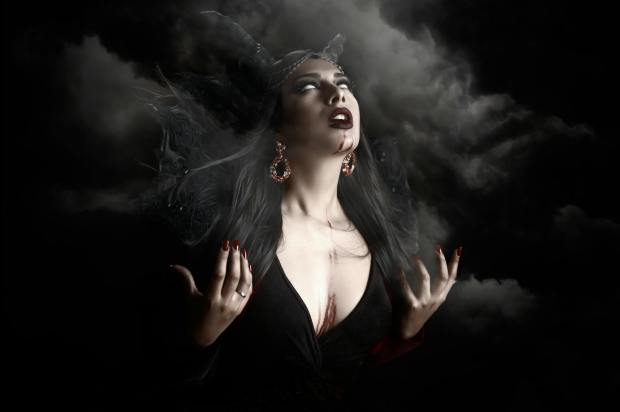
“I loved Maleficent when I was a little girl, she was my favourite Disney character. I was afraid of her and I loved her.” ~Angelina Jolie, Maleficent: From Fairy Tale to Feature Film
Trigger Warning: This article mentions a metaphor for rape.
A couple of weeks ago, I shared part of a writing assignment from my time in UBC’s How to Write a Novel: Structure and Outline course. The purpose of the assignment was to identify the protagonists and antagonists in a book or film, with one having clarity regarding:
- Who was the protagonist?
- What was their primary yearning?
- What were the levels of antagonism that they faced (internal, interpersonal, societal)?
For the first part of the assignment, I chose Lena Kaligaris. The second part of the assignment was to choose an example of a book or film where the components listed above were less clear.
The character I chose for the second part of the assignment was Maleficent from the 2014 live-action film of the same name.
I chose Maleficent because one, I’m a HUGE Disney fan and two, this version of the story totally changed my perspective on Maleficent.
In the original film, Disney’s 1959 Sleeping Beauty, we see Maleficent as the villain, the evil fairy, and that’s that. In Maleficent, we find out her backstory and how and why she turned evil.
However, Maleficent’s good side isn’t completely gone, and this is shown when she cares for the young Aurora from afar.
Maleficent’s internal struggle is what’s left of her heart that is still good, kind and compassionate, while the rest is consumed by hatred and grief because of the betrayal she suffered at the hands of King Stefan, Aurora’s father.
Stefan and Maleficent meet when they are children and progress from friends to true love’s first kiss. Still, as Stefan’s ambition to become more than a stable hand grows, it eats away at anything that might be good about him and is replaced by complete ruthlessness because he will do anything to rise through the ranks until he becomes King.
Stefan accomplishes his goal, and he does so in the most inhumane and despicable way: he drugs Maleficent and burns off her wings with iron to bring them to the dying King. I remember reading an article where the author viewed this scene as a form of rape and I’m inclined to agree. Angelina Jolie confirmed in an interview with BBC that this scene is symbolic of rape: ““We were very conscious, the writer and I, that it was a metaphor for rape,” Jolie said of the harrowing sequence, in which Maleficent’s wings are stolen as she’s in a drug-induced sleep. “This would be the thing that would make her lose sight.”
Stefan was someone that Maleficent trusted, and he broke that trust when he took something that was of great value to her. From this point on, Maleficent displays great distrust of humans and rightfully so, even going as far as to conjure a wall of thorns that spreads across the whole of the moors to keep humans out.
The interpersonal antagonism at work here is Maleficent seeking to keep the moors safe and protected after Stefan’s betrayal, while Stefan’s predecessor and Stefan himself, along with their soldiers, seek the moors for their own personal gains, stopping at nothing to get through the wall of thorns.
Finally, the societal antagonism is the King believing he should have the moors to control and rule over. The King and his subjects think that if they do this, they will be able to rid the moors of the fairy folk. It is my belief that they want to gain control of the moors because they are afraid of the fairies and other magical creatures who make their home there.
It is fear of the unknown; people are always scared of what they don’t know or don’t understand.
It is unclear who the true antagonist is. Is it Maleficent? Or is it King Stefan and his men? Maleficent does curse Aurora, but the humans in the monarchy and those who serve them seem to be at greater fault.
The biggest thing I took away from this film is the message that most people are not born evil; something happens to them along the way to make them change. Good people can turn cruel, but cruel people can also reform and become good.

