Written By: Lauren Long
Date Published: June 25, 2025
“Do you realize how many abusers are walking around unpunished? How many rape charges are dropped because of ‘insufficient’ evidence, or how many date rapists get away with what they’ve done because the victim is too scared to tell anyone?” ~Elle Kennedy, The Deal
Trigger Warning: This article addresses the social problems of sexual violence (rape), rape culture, and domestic abuse. Reader discretion is advised.
Before Elle Kennedy’s Campus Diaries and the love stories of Gigi and Ryder, Diana and Shane, Charlotte, Will and Beckett, there was the Off-Campus series. The Off-Campus series was published ten years ago, and began with the love story of Hannah Wells and Garrett Graham.
I may have only discovered Elle Kennedy and her writing this year, but she has quickly become one of my favourite authors. I love the way she writes her romances, her 100% believable characters who resonate with her audience and her approach to tough topics, which she addresses with the sensitivity, grace and respect they deserve.
In her Campus Diaries series, the following social issues are explored: growing up in the foster care system, domestic homicide, pressuring yourself to do well because of who your parents are, domestic violence and abuse, stalking, feeling out of place, teenage grief, exes who refuse to take no for an answer, and parents who don’t view their children as people to be loved but as things they can use to further their career.
Elle uses the above to build the storylines and backgrounds for her characters, employing the story elements of internal antagonism, interpersonal antagonism, and societal antagonism, as well as conflict and yearning, to help them grow and evolve in their relationships with themselves and the people around them.
In The Deal, rape culture and domestic abuse and child abuse are part of the background stories for Hannah Wells and Garrett Graham.
On the very first page of the book, Hannah is revealed to be a survivor of rape, and as the story progresses, we learn about the effects that Hannah’s rape and the aftermath of the traumatic event had on her and her parents.
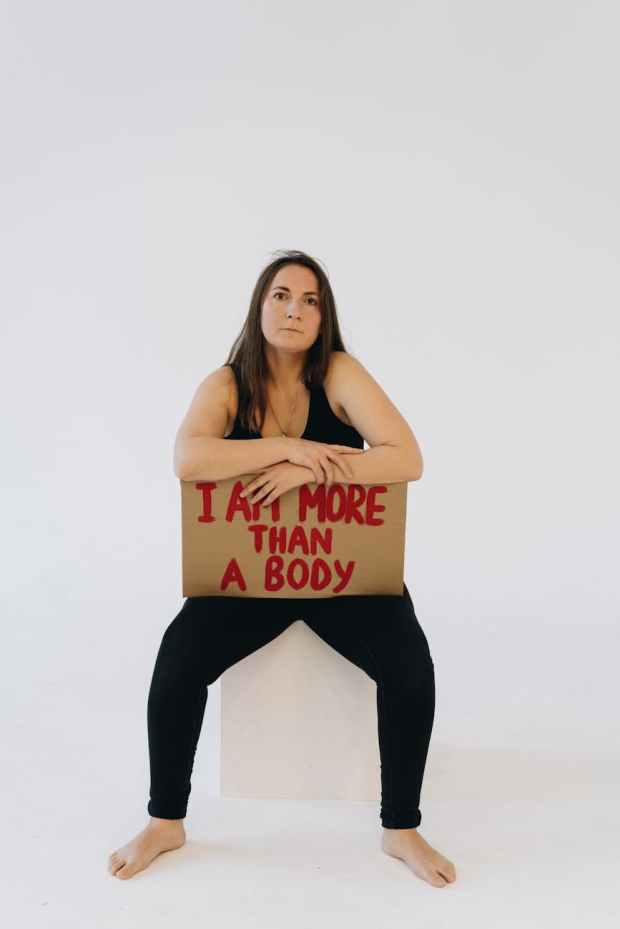
Southern Connecticut State University defines rape culture as: “an environment in which rape is culture and in which sexual violence is normalized and excused in the media and popular culture. Rape culture is perpetuated through the use of misogynistic language, the objectification of women’s bodies, and the glamorization of sexual violence, thereby creating a society that disregards women’s rights and safety.”
Hannah was 15 years old and a virgin when she was drugged and raped by one of her male classmates, and her body has internalized the trauma from that. With her body being unable to recognize that her romantic partners mean her no harm, Hannah has been unable to orgasm with a partner, leading her to feel like there’s something wrong with her.
“I’m broken, and I wanted you to fix me,” she tells Garrett before opening up to him about the rape, something she has not done with a lot of people because “I have to trust someone implicitly in order to confess something so monumental.”
In Garrett, Hannah finds a safe place, and she tells him everything about the most traumatic experience of her life. She shares with him that her parents are ostracized in her hometown and that her rapist walked free because three of his friends lied under oath: “Meaning his pals lied under oath and told the judge I willingly took drugs that night. Oh, and that I’d been throwing myself at Aaron for months, so of course he couldn’t resist taking what I was offering. The way they were going on, you’d think I was the biggest druggie whore on the planet. It was humiliating.”
They used rape culture’s device of victim blaming, which, as defined by SCSU, means: “One reason people blame a victim is to distance themselves from an unpleasant occurrence and thereby confirm their own invulnerability to the risk. By labelling or accusing the victim, others can see the victim as different from themselves.”
The trivialization of rape is also touched on through Hannah’s memory of being at the hardware store with her father and one of the fathers of those who lied under oath made a rude comment about Hannah.
I realize that this is heavy content and that it’s upsetting. I’m certainly upset by it because even though it’s a work of fiction, the social problems of sexual violence and rape culture are very real. As a woman, a writer, and someone who has had her worldviews shifted recently, I feel obligated to join the conversation about ending rape culture and raising awareness about it and sexual violence as a whole.
On their website, the Canadian Women’s Foundation offers the following information:
- “The harm of this preventable violence is significant and has long-lasting, widespread impacts on those who experience it.” (Lori Haskell and Melanie Randall, 2019)
- “Sexual assault is the only violent crime in Canada not on a decline.” (Samuel Perrault, Statistics Canada, 2014)
- “It costs billions of dollars: in 2009, dealing with sexual assault and related offences cost an estimated $4.8 billion.” (Department of Justice, 2009)
Hannah’s story troubled me greatly, and I was cheering for her at the same time. It takes a great deal of bravery to open up to someone the way she did to Garrett and share something so raw, harrowing, and traumatic. When Garrett offers Hannah a safe space to express her darkest truths, she does the same for him.
Garrett is the son of Phil Graham, a retired and revered NHL player, whose public face is very different from who he is at home.
Growing up, Garrett was abused by his father, and just as his daughter Gigi struggles with stepping out of her father’s shadow and standing on her own merit, Garrett struggles with being the son of a respected and renowned NHL player who his teammates look up to, not knowing the monster that Garrett’s father really is.
In real life, former NHL player Patrick O’Sullivan, who played for the Los Angeles Kings, Edmonton Oilers, Carolina Hurricanes, Minnesota Wild and Phoenix Coyotes, wrote the book Breaking Away: A Harrowing True Story of Resilience, Courage and Triumph, opening up about the abuse he suffered at the hands of his father, as well as penning the piece Black and Blue for The Players Tribune.
As I read O’Sullivan’s “Black and Blue,” I was able to draw a lot of parallels between his story and Garrett’s, because even though Garrett is a fictional character, the things he experiences and the emotions he has are very real.
Just as Garrett helps Hannah realize that she is not broken, she helps him realize that he doesn’t have to hide the truth about his dad, which gives him the courage to sit his coach and teammates down and tell them the next time one of his teammates asks him if he can get his father’s autograph.
Elle Kennedy is not only a master at writing romance, she’s a master at addressing tough topics through her writing, writing about the importance of consent, and about men who hold space for the feminine and recognize that we are not objects of lust, but people with autonomy, identities and emotions. These men do exist in the real world.
Thanks for reading!
Until Friday, xoxo
Created With ❤️ By Lauren
Further Reading:
Rape Culture, Victim Blaming, and The Facts: https://inside.southernct.edu/sexual-misconduct/facts
The Facts About Sexual Assault and Harassment: https://canadianwomen.org/the-facts/sexual-assault-harassment/
Patrick O’Sullivan: Black and Blue: https://www.theplayerstribune.com/articles/patrick-osullivan-nhl-abuse

