Written By: Lauren Long
Date Published: September 26, 2025
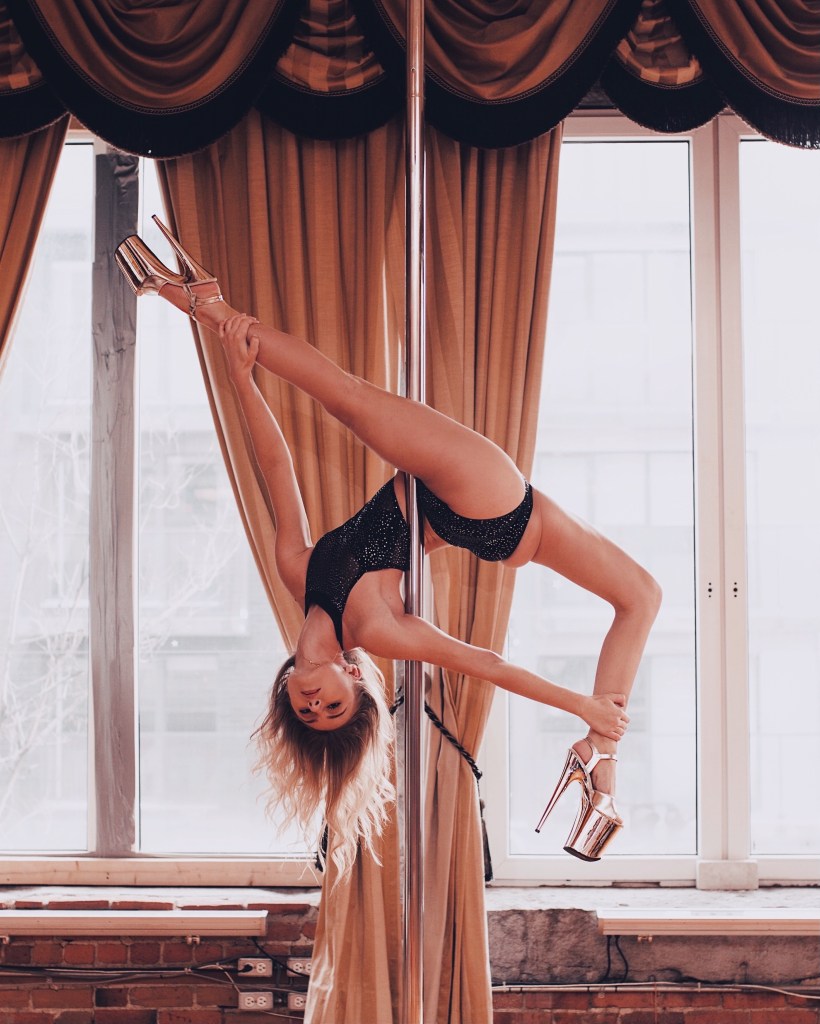
“Pole dancing is absolutely life-changing. It certainly was for me, and I know it is for many other women as well. It’s incredible that pole provides a safe outlet for women to explore their sensuality while simultaneously working on their athleticism, strength, and flexibility. Pole has allowed me to explore my sensualilty and femininity in a safe outlet. It’s incredibly empowering to know that I can tap into that part of myself for my own sake, and not for anyone else.” ~Diana
Trigger Warning: This article contains mention of sexual assault, social anxiety and depression.
Hello, dear readers, and welcome to the Empowered Pole Dance Project’s latest feature! If you’re just joining us, welcome, and to our old hands, welcome back! When I interviewed Dr. Emily Rausch and released the podcast announcement for her interview, I said that going forward, the pole dancers I talked to would have the option of doing a podcast episode with me, a written interview or both.
Our next guest and featured dancer decided to do both. Please welcome Diana, who hails from Montreal, Quebec and is a pole dancer, a business owner, and an all-around amazing human being. This is her pole journey.
From Gymnastics to Pole Dance: My Introduction to the Pole World
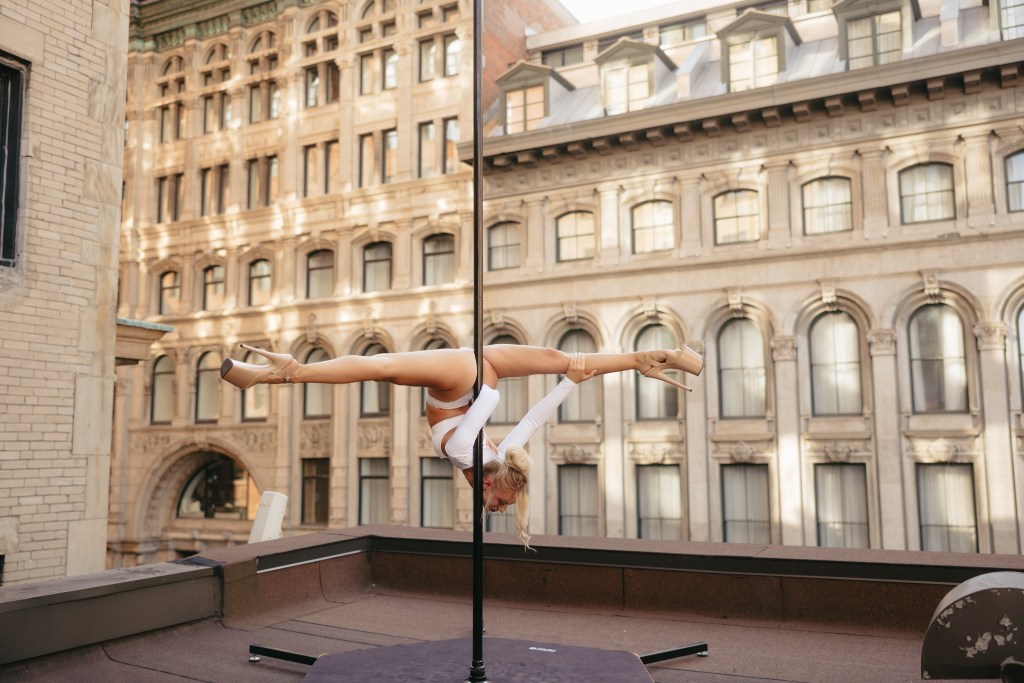
“My first exposure to pole was actually at a Cirque du Soleil show, the MJ Immortal World Tour, when I was 14 years old,” Diana tells me when we sit down to chat. “That was the first time I saw a pole artist perform, and I believe the routine was set to ‘Dirty Diana’. It left a huge impression on me, but it wasn’t until a few years later, at 17, that I consciously discovered pole as an activity.
At that time, I had quit gymnastics a couple of years prior and was searching for a new passion. I tried yoga and dance, but nothing quite filled the void that gymnastics left. I was going through a bit of an identity crisis and felt depressed; I knew I needed something to ignite that spark again. Gymnastics was a major part of my life growing up. Being Romanian, gymnastics is practically a national sport. If you’re familiar with Nadia Comăneci, the first gymnast to score a perfect 10 at the 1976 Montreal Olympics, you’ll understand how deeply rooted gymnastics is in Romanian culture.
I did gymnastics from ages 5 to 15. Although I never reached a very high competitive level due to taking breaks here and there, it was something I was extremely passionate about. Gymnastics laid the foundation for my pole journey, as it helped me develop upper body strength and flexibility, giving me a solid base when I started pole.
In the summer of 2015, I stumbled across a YouTube video of a pole performance. I was so mesmerized and had to beg my mom to sign me up for pole lessons. Although she was confused at first, I showed her videos and explained how it was similar to gymnastics. Thankfully, she agreed! That’s how I officially started my pole journey at 17.”
I’m so glad that you found something that lit your fire, Diana. When you’ve done something like gymnastics for so long and then make the decision to quit, only to feel like you’re struggling and you’re missing a part of your identity, it feels like you’re swimming with no shore in sight.
I am not familiar with the gymnastics world or Nadia Comăneci, and I also didn’t know that the sport of gymnastics was so deeply ingrained in Romanian culture! I’m always learning new things from the dancers I interview, so I’m grateful to you for teaching me something new today! We can all learn from each other if we take the time to listen and allow our minds to be open. And I’m so glad that your mom saw the similarities between gymnastics and pole and agreed to sign you up for pole lessons.
Friends and Family and Societal Challenges
“When I started posting my training videos on Instagram in 2016, people were quick to judge and slut-shame, even though my practice was focused purely on fitness and acrobatics, and I wasn’t even wearing anything different than what I’d wear to the gym or on a hot summer day. The fact that it involved a pole was enough to spark controversy.”
As we’ve seen with every pole dancer who has been featured in this series, friends and family have different responses to their family member or friend’s passion for pole dancing. Some are supportive, others not so much, and then there’s having to contend with the opinions of society, both online and off.
“I’m very lucky that my family was quick to see the artistry in pole and understand what I was trying to achieve,” Diana says. “They’ve been incredibly supportive overall. However, it took my mom a bit longer to fully grasp the purpose behind it all. Her support grew stronger once she saw that I was actually good at it – when I started winning competitions, teaching, and making a living from it by launching my brand. I think seeing those tangible results helped her understand the significance of what I was building. My aunt has tried pole, and so have my closest friends. Everyone is always so surprised by how painful and difficult it actually is!”
I’m so glad to hear that your family gained a rapid understanding of pole artistry, Diana, and that your mom’s support grew stronger the more she saw you achieving your goals. I agree that those achievements helped her comprehend the importance of the foundation you were building. Ahh, yes, the classic realization of people who think that pole looks so easy when they see us do it, only to be shocked at the reality of how hard it is when they try it themselves.
It’s good that Diana had her family’s support from the get-go, because she faced opposition from others, some of it utterly derogatory and negative. “One of the biggest challenges I faced was societal,” she tells me. “I started pole when I was very young, not even 18, and many of my friends were confused about my new passion. To clarify, I began in a fitness studio that offered various classes, and ‘pole fitness’ was just one of them. It wasn’t a dedicated pole studio, and my focus was initially on tricks rather than dance or choreography, which was age-appropriate for me at the time. It took about 2.5 to 3 years before I started incorporating dance elements and wearing heels.
Despite my approach, there was still a lot of stigma around pole. This was about a decade ago, and pole wasn’t nearly as mainstream as it is today. When I started posting my training videos on Instagram in 2016, I attracted a lot of unwanted male attention and negative comments. People were quick to judge and slut-shame, even though my practice was focused purely on fitness and acrobatics, and I wasn’t even wearing anything different than what I’d wear to the gym or on a hot summer day (shorts & a tank top or crop top). The fact that it involved a pole was enough to spark controversy.”
I think no matter how you approach pole dancing, Diana, there are going to be people who don’t understand and aren’t interested in understanding. I’ve also received unwanted male attention, judgment and negative comments, and I have had people disagree with me doing pole, but I’ve learned to not listen to them and their opinions of me.
I’m sorry that you were slut-shamed. It’s something that no one should have to experience and feeds into the sexual objectification and chauvinism that we see in our everyday society, and that pole dancers from all avenues of this art form experience.
Obstacle: Going Up Against Misogyny and Sexism
By now, we’ve heard many dancers express their opinion on what they believe the biggest obstacle pole dancers face is.
“One of the biggest obstacles pole dancers face is that it’s still a very new industry without universal standards,” Diana says when I ask for her thoughts. “There’s no specific certification to become a pole instructor – anyone can claim that title, and while some certifications are legitimate, others can be overpriced or less credible. Most studios don’t require certifications.
“Another major challenge is the absence of industry infrastructure,” she adds. “As pole artists transition into performing professionally, they soon realize there are no support systems – no agents, managers, or assistants like in other entertainment industries. This makes it challenging to navigate the business side of pole and often leads to not being taken seriously.
“On top of that, there’s still a lot of misogyny and sexism. Many people can’t see past the fact that you’re a woman performing in minimal clothing, no matter how skilled or artistic you are. This bias can unfortunately result in lowball offers and a lack of respect. One strategy I’ve found helpful is to pretend I have a male manager/agent when negotiating gigs. It’s unfortunate, but it elevates how you’re perceived and treated.”
Wow. I have actually never thought of that, Diana. How athletes and people in other entertainment industries have managers, agents and assistants, and there’s nothing like that for us. It would make things much easier, that much is certain, and hopefully that is something we will see begin to change, along with the public’s overall perspective of pole dancing continuing to change for the better.
Public’s Perception, Acknowledging and Appreciating Strippers, and the Life-Changing Experience of Pole Dancing
“I would love for the public to gain a more complete understanding of pole dancing and all its different facets. It’s important to acknowledge and appreciate the strippers who paved the way for pole to become everything it is today.”
“I think the perception of pole has changed for the better,” Diana says when I ask her what she thinks about the perception of pole. “With it becoming more accepted in the mainstream and being acknowledged as a form of art, it opens the door to so many more opportunities. Whether someone is a stripper or not, these opportunities are beneficial because they offer more ways to make a living and gain recognition. I see that as a positive development. With that being said, I would love for the public to gain a more complete understanding of pole dancing and all its different facets. It’s important to acknowledge and appreciate the strippers who paved the way for pole to become everything it is today.”
I completely agree, Diana!
“Today, pole can be whatever you want it to be – whether it’s dancing in clubs, pursuing personal fitness goals, becoming an instructor, or a professional pole artist performing in circus shows and alongside musicians,” Diana continues. “It’s exciting to see the growing opportunities in this field. It might sound crazy, but I realized pole was going to become a main part of my life very early on – after my first class, in fact. It was much harder and more painful than I had imagined, but I was determined to get good at it. Part of that determination came from my ability to see into the future of the art form…It’s like I could predict that pole dancing would gain popularity over the next few years. I envisioned mainstream shows, events and musicians incorporating it into their acts. I knew that if I stuck with it, I’d have the potential to be really, really good by the time those opportunities became available. Ultimately, I hope to see the stigma disappear and for pole dancing to be respected as an art form, just like any other type of dance or circus discipline.”
Your intuition was bang-on, Diana, because we are seeing mainstream shows, events and musicians combining pole performances with their acts.
“Pole dancing is absolutely life-changing,” Diana says to express her opinion on the importance of raising awareness about the benefits of pole dancing. “It certainly was for me, and I know it is for many other women as well. It’s incredible that pole provides a safe outlet for women to explore their sensuality while simultaneously working on their athleticism, strength, and flexibility. Pole has allowed me to explore my sensuality and femininity in a safe outlet. It’s incredibly empowering to know that I can tap into that part of myself for my own sake, and not for anyone else. I think it’s cool that it offers this opportunity to adults, allowing them to start something new and excel at it. This is rare in other artistic sports, where you need to start at a young age. Pole is such an acrobatic and creative outlet, offering a space for women to dedicate their time and effort to a hobby that’s not only an amazing workout but also great for mental health. It’s empowering to master the pole and perform incredible tricks. It makes you feel strong, powerful, and in control of your own body.”
Let’s Talk About Pole Improving Mental Health and Changing Who We Are As People
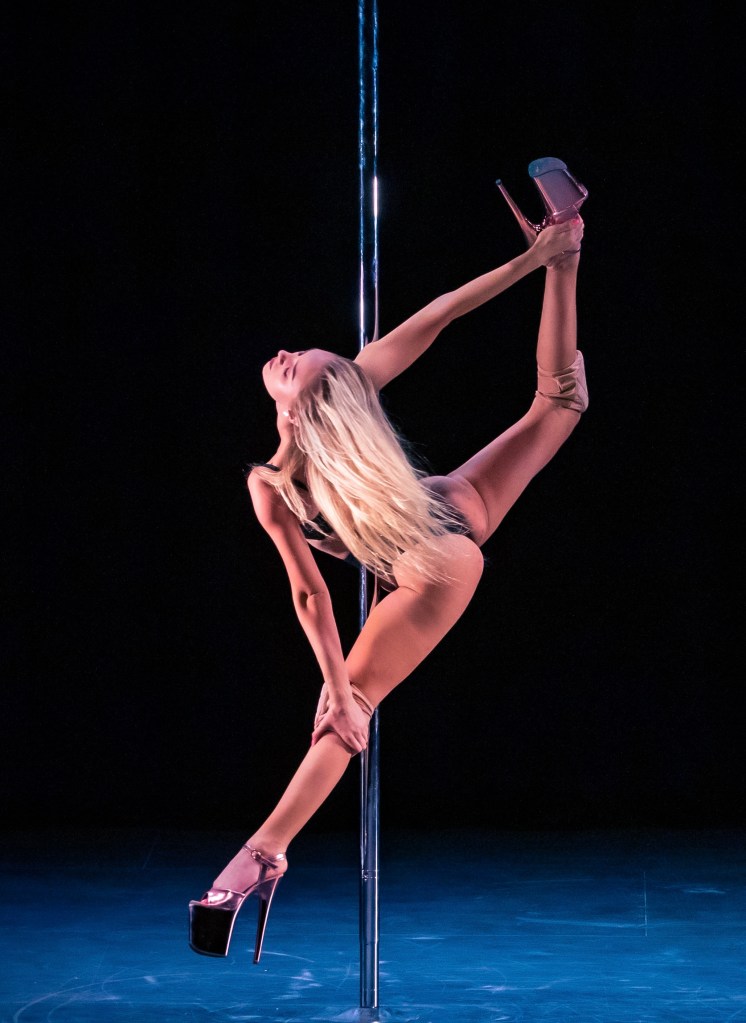
If you’ve been following this project for a while, or since the very beginning, then you know that pole dancing has had a positive impact on the mental health of the dancers who take part in this art form. It’s been an aid in healing from breakups, rediscovering self-worth and recognizing and letting go of the shame that comes with being sexually assaulted, just to name a few.
“Yes, pole dancing has helped me acknowledge and heal from past trauma. It took me a couple of years to fully realize how much it had helped,” Diana says when I touch gently on the topic. “Before discovering pole, I experienced sexual assault. At the time, I brushed it off and repressed what had happened, but it began affecting me later, especially when I started dating.
Pole dancing allowed me to take my agency back over my own body, helping me feel strong, confident and empowered. Tapping into my sensuality and femininity on my own terms, for myself, and not for the male gaze was crucial in my healing process.”
Diana, I’m so sorry that happened to you. I have heard another story where pole dancing has helped the dancer acknowledge the sexual assault and heal from the trauma of it, as well as the feeling of being set free from the shame and fear that they felt after being sexually assaulted.
In addition to pole being a crucial part of Diana’s healing process, it has had a significantly positive impact on her mental health.
“Pole dancing has been incredible for my mental health,” Diana says. “It pulled me out of depression when I was 17. At that time, I was learning in my psychology courses that engaging in a hobby could break the cycle of depression, so I was actively trying new activities. Since discovering pole, I’ve never experienced that level of depression again. It doesn’t mean I don’t have down days or tough moments, but pole has taught me mindfulness. When you’re on the pole, you have to focus completely on what you’re doing because it’s dangerous and technical. There’s no room for distractions, which helps you stay present.”
Diana, your words are words for the wise! I’m so glad you brought up the point of how dangerous pole dancing can be, because I think that’s something we don’t talk about enough, and we need to make more of an effort to do so.
“Definitely! It’s made me feel strong, capable and proud of my body. That confidence has spilled over into every part of my life,” Diana replies when I ask her if pole dancing has increased her self-esteem. “I’ve changed immensely as a person since beginning my pole journey – I’m a completely different person now,” she adds. “Ten years ago, I had such intense social anxiety that I ate my lunch hidden in a bathroom stall at school. Today, I feel most alive in front of roaring crowds of tens of thousands. While I still face anxiety and imposter syndrome at times, deep down, I know I’m capable of amazing things, and I carry that confidence into every room I enter.
It’s empowered me in other parts of my life for sure, and in a way, pole has allowed me to tap back into my inner child. I was obsessed with gymnastics and learning new acrobatic skills as a kid, and after quitting gymnastics, I really missed that feeling. Through pole, I’ve been able to reconnect with that part of myself, honour my inner child, and do what I’ve always loved – acrobatics and learning cool tricks.
I started my own business because of pole. It pushed me to dream bigger and create my own path, without following anyone else’s roadmap. I wouldn’t be the person I am today without pole. I never would have even considered starting a business if it weren’t for pole… but here I am, building something I’m passionate about, on my own terms.”
I love that, Diana! I think it’s easy to get caught in others’ expectations and roadmaps for us, so it takes a lot of belief in ourselves and a lot of courage to leave those behind and create our own. It’s scary, but it’s also incredibly empowering!
It’s All About Empowerment!!
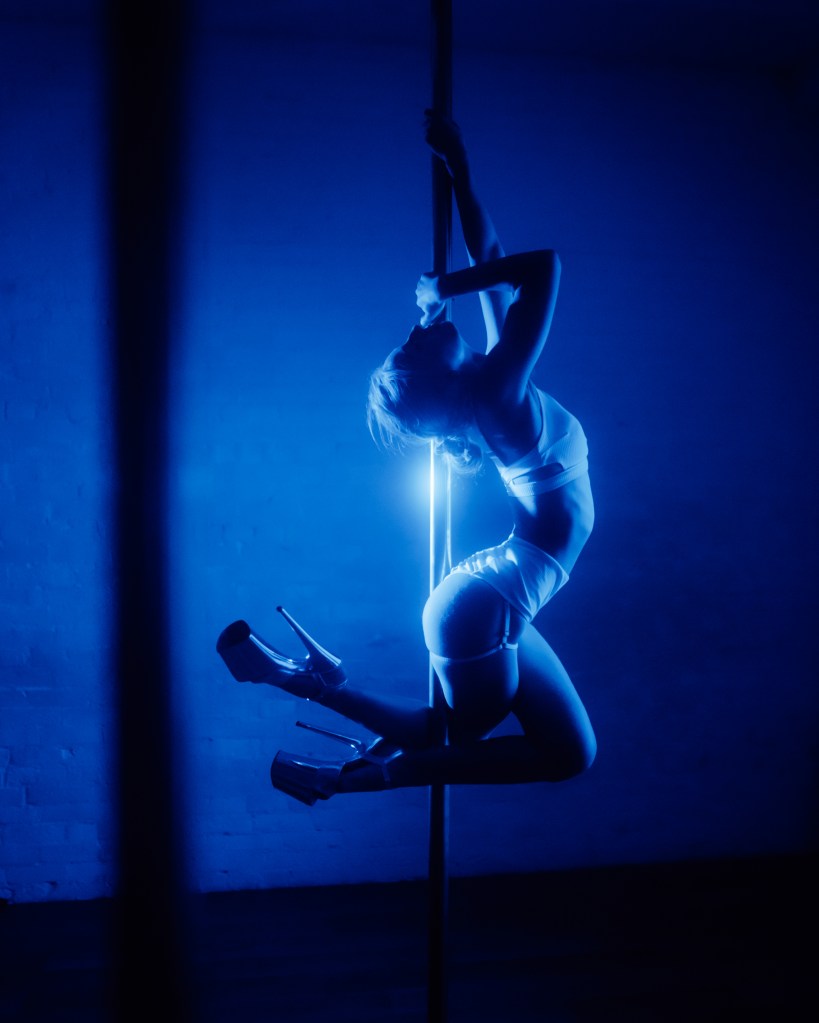
“The emotion connected to the word ’empowering’ is a deep sense of self-confidence and pride. It’s that feeling of knowing you’re strong, capable, and in control of your own body and journey.”
“Empowering is the word I use to describe pole dancing and the emotion connected to it,” Diana says. “The emotion connected to that word is a deep sense of self-confidence and pride. It’s that feeling of knowing you’re strong, capable, and in control of your own body and journey. I think pole can bring empowerment, confidence, and strength into people’s lives. For anyone who’s interested in pole but is hesitant to try it, I think people will judge you no matter what you do. No matter how perfect you try to be, there will always be some who criticize you or have their own opinions. Honestly, it’s often because those people are jealous – they might not be brave enough to do what you’re doing, and they wish they could. Their immediate reaction is often to think negatively about it.
But with pole becoming a more accepted form of art and athleticism, I hope that stigma continues to fade away. Focus on your own journey and the empowerment and joy it brings you.”
I absolutely agree with everything you’ve said, Diana! I agree that people’s immediate negative reaction to pole and people who do it is born out of jealousy and, in my experience anyway, causes the recipients of that jealousy to respond defensively.
On a lighter note, Diana’s messages of empowerment extend to the content she posts on social media. “Oh absolutely!” she replies when I ask if she has people in her life who, after seeing her videos or images on the pole, have expressed interest in learning how to do what she’s doing. “I’ve lost count of the amount of people who have told me they want to learn pole after seeing my videos. It’s really cool to hear that I was their introduction to pole. I’ve had people from my university, my high school, childhood friends, and even strangers on Instagram tell me I inspired them to start. It’s amazing to see some of them thriving today with their own pole businesses. It’s incredible to witness that growth, and I’m honoured I had a hand in inspiring it.”
Every pole dancer you’ll meet has someone, or multiple people, who inspired them to start on the pole. For Diana, there were two. “Anastasia Sokolova and Anastasia Skukhtorova were the ones who really inspired me early on,” she says. “I looked up to them, and they were a big reason I decided to pursue pole in the first place.”
Well, Diana, I certainly understand how and why those two ladies would inspire you, because I think they’re pretty inspiring too!
Physical Aspects of Pole: Challenges, Body Fitness and Consistency
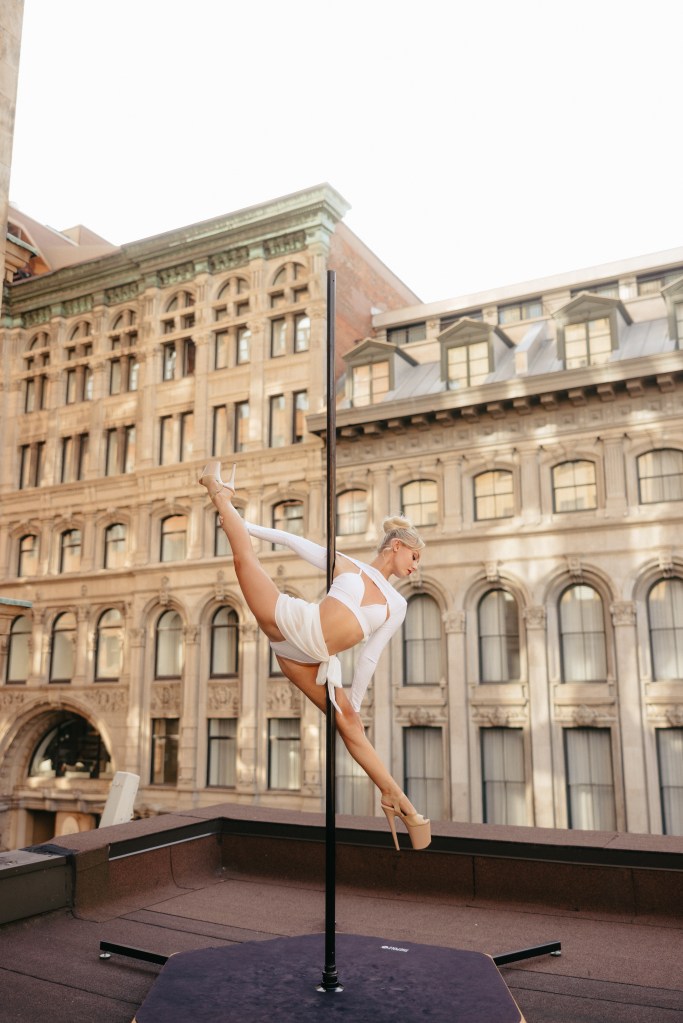
We wind down our talk by chatting about the physical side of pole and the challenges and triumphs that come with it.
“Physically, pole has made me the fittest I’ve ever been,” Diana tells me. “It’s improved my flexibility to a level even beyond what I had when I was younger, because I’m actively working on it and maintaining it.
When I first started, I struggled with certain strength-based tricks, and that’s something I still occasionally find challenging. For the longest time, I focused solely on pole multiple times a week without supplementing it with other activities. However, I found myself hitting a plateau over the last couple of years, so I’ve made a conscious effort to integrate additional training into my routine. I aim to do at least an hour of deep flexibility training each week. While some weeks I miss it, I’m doing my best to make it a consistent part of my routine.
Another significant hurdle was that I never practiced on static mode until about three years into my pole journey, so I didn’t learn the basics of static early on. To this day, I still find static combos and dynamic combos more difficult, and I feel my skill level in those areas is lower compared to my flexibility and spin pole combos. I’d love to get better at them though, because they look amazing when done right. I’ve also started incorporating conditioning sessions a couple of times a week. It’s challenging to build a consistent routine, but I’ve been making progress. I can already feel the benefits, and it’s definitely helping!”
The physical side of pole is definitely an important one, and like you, Diana, I’ve started incorporating conditioning sessions a few times a week, and I agree it is difficult to build a consistent routine, but if we stick with it, it becomes second nature! I can feel the benefits of my sessions too!
Ending On a High (Empowering!) Note
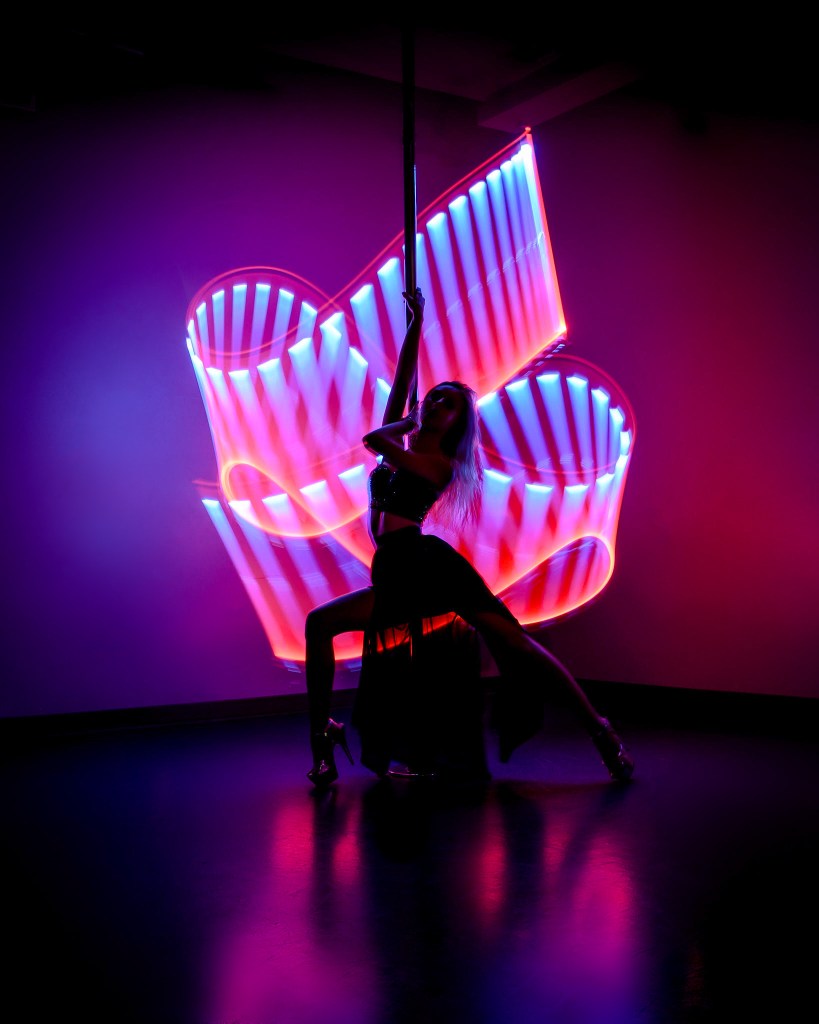
The pole community is one I’m honoured to be a part of, and I feel even more honoured to have built and be a part of the community I have through the Empowered Pole Dance Project.
“I love how supportive the pole community is. Everyone celebrates each other’s progress and journey. I’ve met so many awesome people through pole,” Diana says as we wrap up our interview. I couldn’t agree more on all counts.
Thank you, Diana, for sharing your story with us. I’m honoured to have you be part of this.
With that, dear readers, another story of The Empowered Pole Dance Project ends, but there are more stories to be told and more lives to be empowered.
Thank you, Diana, for sharing your story with us, and thank you, my dear readers for reading.
As always, all images and content are used with consent.
Until next week, xoxo
Diana’s podcast episode is now available on YouTube and Spotify!
To Watch: https://www.youtube.com/watch?v=4CHYSUh_NEk
To Listen: https://open.spotify.com/episode/76WCOen9QEAvCWykCzQFe4?si=DYqZzqswRFS8jR4I16VulQ
To book a pole lesson with Diana, visit https://www.dianapoleartist.com/
To check out her brand, Divinity PoleWear: https://divinitypolewear.com/
Interested in being a part of The Empowered Pole Dance Project? I would love to hear from you! Send me an email at lauren@empoweredprose.ca or DM me on Instagram at @laurla731 ❤️❤️❤️❤️

