Written By: Lauren Long
Date Published: October 29, 2025
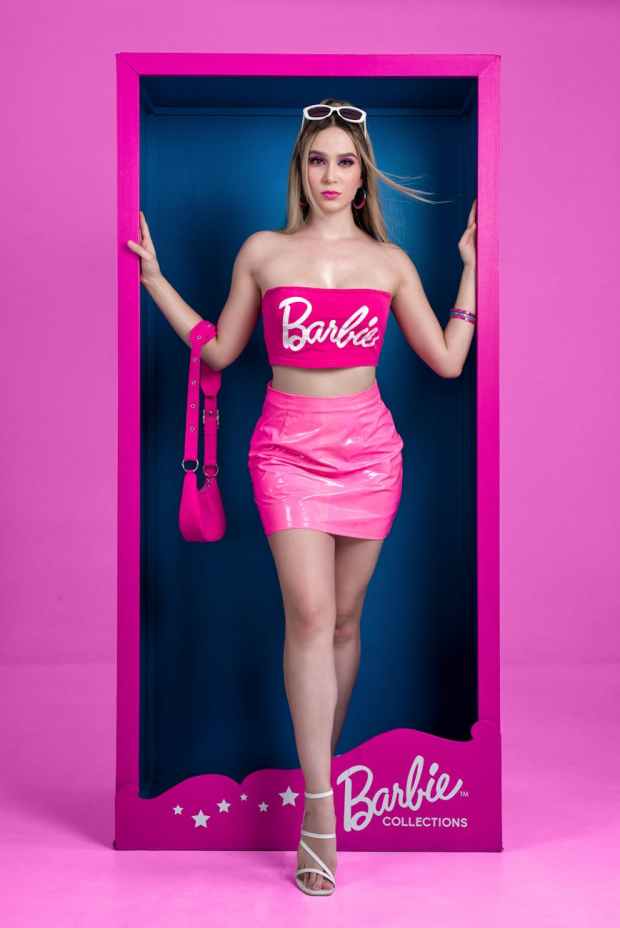
“By giving voice to the cognitive dissonance required to be a woman under the patriarchy, you robbed it of its power.” ~Barbie, The Barbie Movie
Barbie dolls were a staple in our house growing up.
Whenever my sister asked me to play Barbies with her, I would follow her downstairs somewhat reluctantly, feeling like I was getting too old. Now that I think about it, I think the real reason was that some of the friends I had at school had teased me about still playing Barbies at my age.
Once my sister and I started playing, though, all of that would fade away. We would play for hours, losing track of time and reality until one of our parents called us for dinner. Those were the days when everything was simpler, and we could lose ourselves in make-believe.
I didn’t see the Barbie movie when it was released in 2023, but I certainly heard about it. Every time I opened my Instagram and Facebook, there were multiple pictures and a sea of people wearing pink to the movie. This summer, I finally had the chance to see it for myself.
I thought the movie was good. I’m aware of the mixed reviews it received, but I enjoyed it. I did find some moments to be a little corny. Still, overall, the film had a lot of good messages, including America Ferrera’s powerful monologue about what it means to be a woman in today’s society, and the double standards we deal with daily. The monologue was my favourite part of the movie because it was so relatable, and everything America’s character, Gloria, says resonates not just with me but with women around the world. With 1.5 million views on YouTube, her speech continues to be popular there and on Instagram, where it has been shared to many Instagram stories, including mine, on International Women’s Day.
In her article “Feminism, Sexism and the Barbie Movie,” Roz Larsen praises the film and its messages of protesting society’s unrealistic standards and women’s empowerment without diminishing men.
“The core theme of this film lies in its elegant and simple delivery of its message: women can transcend their ‘assigned’ roles as mere mothers and defy the societal double standards imposed upon them,” Larsen says. “Moreover, Barbie advocates that women’s empowerment does not require neglecting the opposite sex.”
More and more, we’re seeing women push back against the societal standards that have been in place for years, and this movie isn’t the first to call them out while simultaneously spreading messages about realizing your self-worth and establishing that you are strong enough to fight back and stand on your own.
Other films that showcase this are the Disney films Aladdin, Beauty & the Beast, and Mulan, just to name a few. There are more, of course, but those three are what came to mind while I was writing this article.
Belle and Mulan both push back against the ideals and expected gender roles of their tradition-bound societies, while Jasmine vehemently states that she is a person and “not a prize to be won!” This declaration of self-worth is further expanded upon in the 2019 live-action version of the film, when Naomi Scott belts out the power ballad “Speechless,” further asserting Jasmine’s confidence in knowing her worth as a woman and a human being. The song is a battle cry for everyone, not just women, to raise their voices and speak up and out despite those who try to silence them.
How does this tie into the Barbie movie? They carry the same messages and the same vision, as well as a little bit more. When Greta Gerwig was hired to be at the film’s helm, she knew what she wanted to do and what story she wanted to tell. Her vision of the finished product was that the film would be “an earnest attempt to ‘make amends’ between affirming women’s worth and conveying the impossibility of perfection, which some have perceived to be standards associated with Barbie.”
In the words of Coach Beard from Ted Lasso, “Perfection sucks. Perfect is boring.” And in some cases, the pursuit of perfection can be dangerous. I’m talking about body image and the unrealistic and dangerous goal of having a body like Barbie’s. That’s one of the amends Greta was attempting to make, and we all need to make an effort to break that cycle. We’re not there yet, but with more work and awareness being raised about the different types of eating disorders and their dangers, as well as encouraging positive, meaningful conversations about healthy body image and relationships with our bodies, it can be done.
Another theme of the film that is addressed is the submissiveness of women to men. When Ken and Barbie go to the real world, Barbie is trying to figure out how this world works, while Ken is immediately taken in by the patriarchy and is inspired to enforce it in Barbie land, which he does when he returns.
The other male inhabitants of Barbie land quickly get on board, and indoctrinate the Barbies into the submissive roles of girlfriends, housewives, and maids, stripping away their autonomy and value of self in the process.
When Gloria delivers her passion-infused monologue, expressing her frustration at the conflicting expectations and standards that women are forced to follow in the real world, and the Barbies are now being forced to follow in theirs, her words deprogram the Barbies from the enforced misogyny and help them rediscover their self-worth and value, which they then use to break the other Barbies free of the Kens’ control.
In a lot of ways, this storyline changes the world of Barbie land for the better because things weren’t equal between the Barbies and Kens before Barbie and Ken’s jaunt to the real world. The theme of systemic oppression comes into play here because once the Barbies experience what the Kens were experiencing and their feelings, they realize that things weren’t fair, and they didn’t always treat the Kens fairly. When the roles were reversed and the two groups met face-to-face, both parties realized the wrongness that was underneath the surface, and they learned and grew from their mistakes.
The Kens’ embracing of the patriarchal values, the treatment of the discontinued Barbie models, who are pariahs in the society of Barbie land due to unconventional traits, and the period of time where the Barbies are forced into submissive roles, help everyone to realize that their society was unfair, unequal, and they all seek to rectify it using the lessons learned from the recent occurrences.
Finally, here are the messages that the film sends and encourages its audience to apply to their own lives:
- Self-discovery and Authenticity: When we embrace our authentic selves and learn to be proud of who we are, we discover a lot about who we are as people and that what makes us unique is our greatest strength.
- Having the courage to challenge gender stereotypes: learning to be unprejudiced about our own interests as well as those of others, and not restricting ourselves based on others’ opinions of what is “appropriate” for gender.
- Recognizing and cherishing the value of friendship: We’re stronger when we stand together, and that applies to working together instead of alone to find solutions to problems.
The Barbie movie offers many valuable life lessons and messages, ones that need to be heard now more than ever because they are what will make the world a better place, not fear, hate, prejudice, and division.
Thanks for reading!
Until Friday, xoxo

